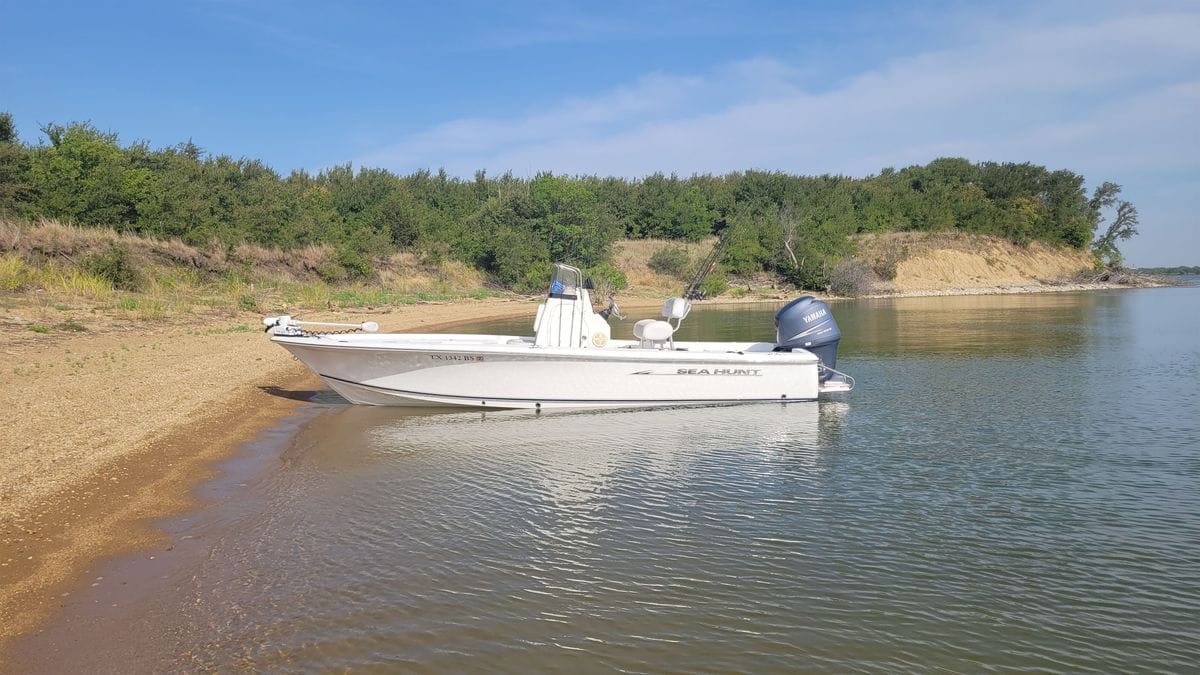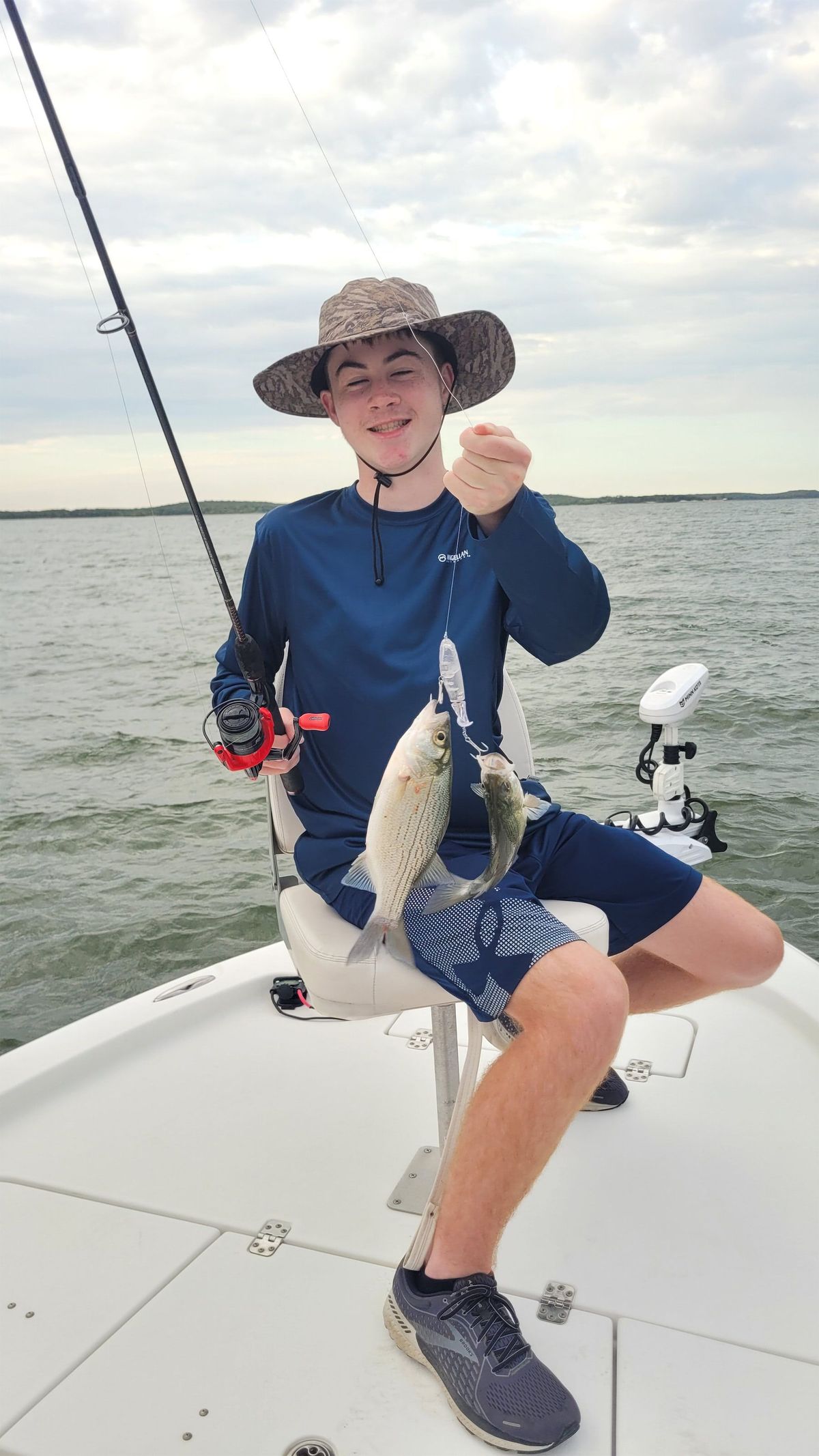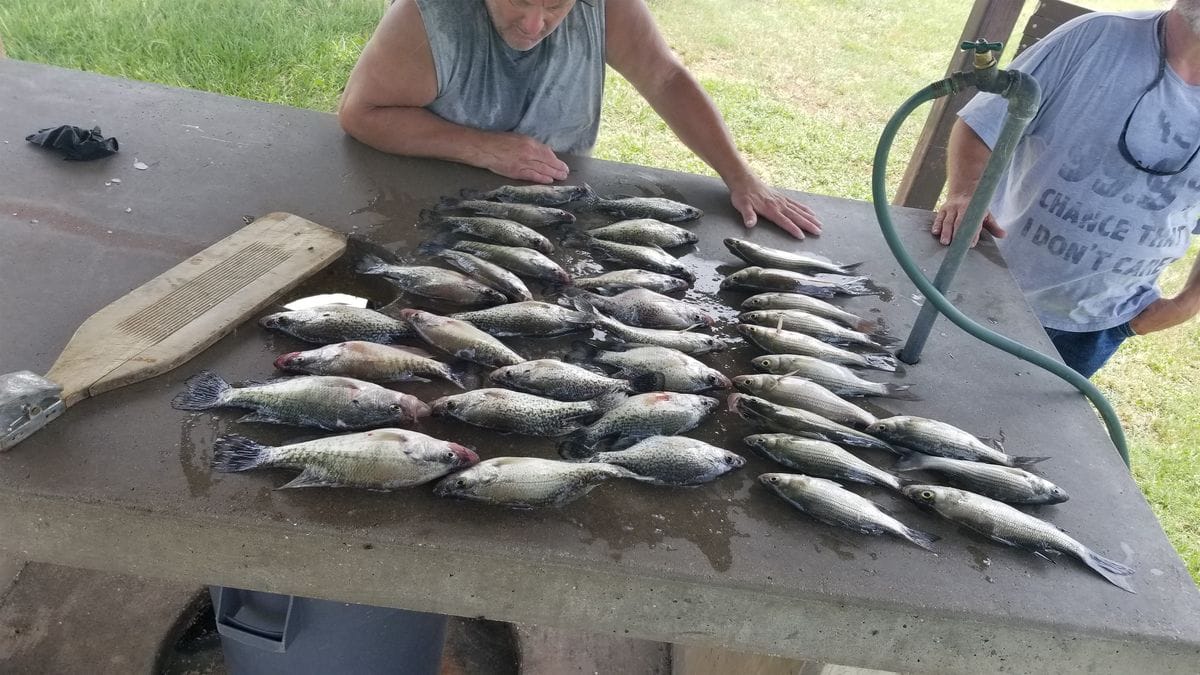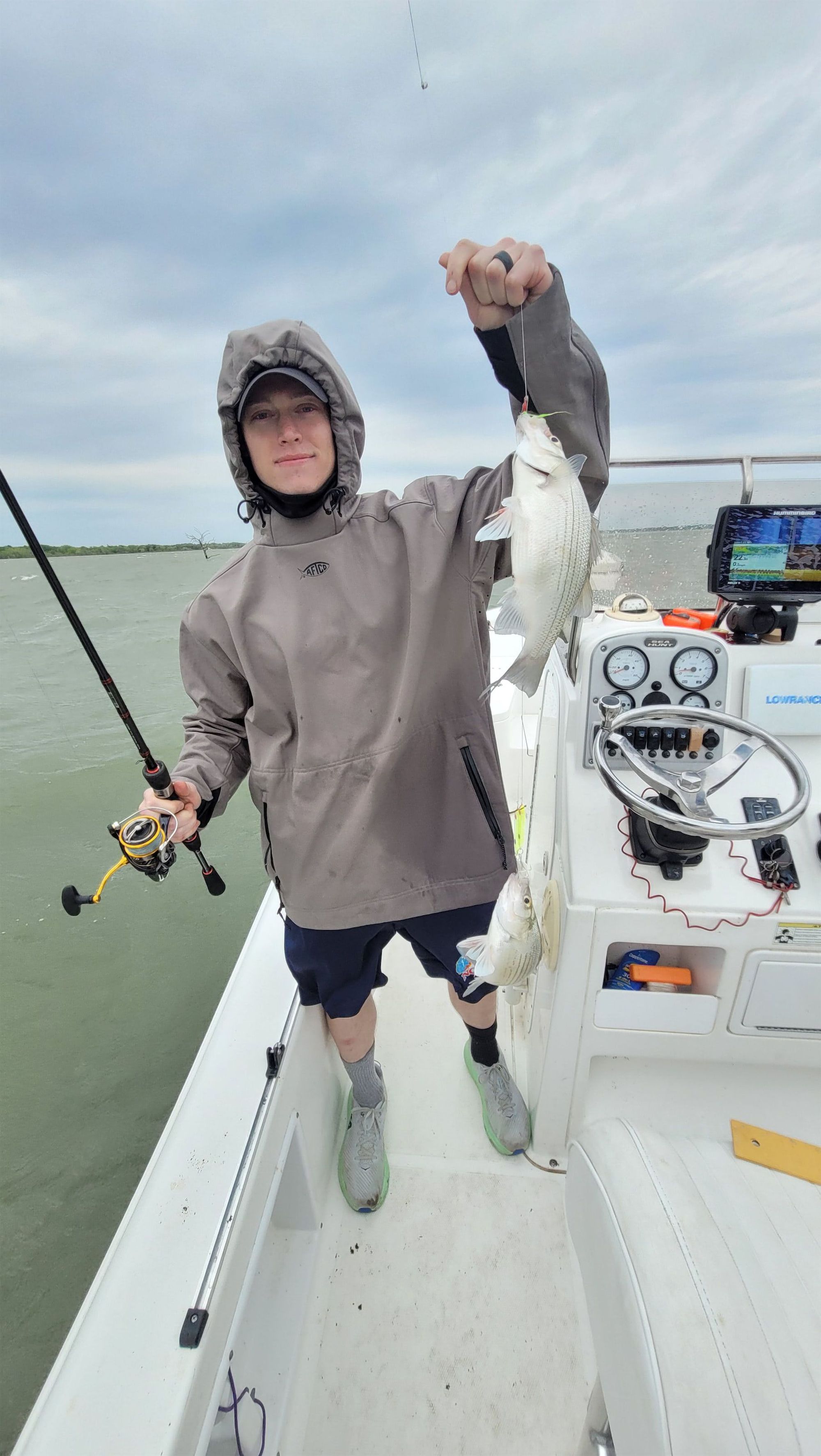
People ask me what a guided trip is going to be like. The honest answer is it depends on the day. Stripers, catfish, bass, time of year, weather, how rough the water is, who's on the boat. All of it changes the shape of the trip. But the general arc is the same most days, and if you've never done this before, here's roughly what to expect from when you pull into the parking lot at sunrise to when we tie up back at the dock.
This isn't a brochure. I'm not going to tell you the trip is going to be the best day of your life. Some trips are great. Some trips are slow. Most trips are good. What every trip is, though, is honest. You're paying for somebody to run their boat, read the water, and put you on the best fishing the day will give you. Here's what that actually looks like.
Before You Get to the Ramp
I've already been up. Coffee in the truck, boat hooked up, bait tank running. I'm watching the wind and the temperature on the drive in. By the time I'm backing the trailer down the ramp, I've usually already decided where we're starting, because I worked through the night-before piece the evening prior. (More on how I figure that out in the post about picking the spot.)
You show up at the ramp at the time we agreed on. No earlier is fine. No later is better. Park where the parking is. Walk down to the dock and look for my boat. I'll be the guy already standing by it with two coolers and whatever the morning equivalent of a smile is.
The First Run
We load up. Coolers in, sunscreen on, life jackets on for the run. I'll cover the boat-safety stuff in about two minutes because the Coast Guard requires it and because it actually matters. Then we go.
The first run depends on where we're starting. Could be five minutes to a creek arm. Could be twenty minutes to a deep main-lake structure. While we're running I'm watching the screen and the sky. Sometimes the plan changes on the run because I see something better on the way. That happens.
If we're running far, conversation usually starts somewhere in there. Where are you from. Is this your first time on Whitney. Have you fished much before. I'm asking because it changes how I rig the boat and how much I'm going to coach you on the rod. I'm not making small talk.
Setting Up the First Drift
We get to the spot. I idle around it for a minute, watching the sonar, looking for bait, looking for fish on the screen. If it looks right, we set up. Trolling motor down, rigs out, baits in the water. I'll get everybody dialed in on what the rod is supposed to feel like, what to do when it loads up, how I want them to set the hook. Most people overthink this part. It's not hard. You'll figure it out fast.
Then we fish.
The Mid-Morning Lull
There's almost always a lull somewhere between 8:30 and 10. The sunrise window winds down, the water warms a degree or two, the fish reposition. Coffee's mostly gone. The first fish is usually in the cooler by now, or we're working on it. The boat gets quiet for a stretch.
This is the part of the trip where new clients sometimes get nervous. They think the fishing died, the spot's not working, the day is broken. It usually isn't. The fish are just resetting. I'll either keep us where we are and wait it out, or I'll move us to a second spot if I'm not seeing what I want.
That's not a failure. That's the rhythm.
When the Plan Changes
Most trips, the plan changes at least once. The wind shifts and our drift goes sideways, or the bait scatters, or I look at the screen and decide we should run to a different stretch. I'll explain the move while it's happening. "We're going to slide a quarter mile over. I'm not seeing what I want here."
Some days that move happens at 7:30. Some days it doesn't happen until 10. Some days we never have to move. I don't know which kind of day it is when we leave the ramp, and I'm not going to pretend I do.
When the Fish Show Up
Most trips have a window. A 45-minute stretch, sometimes shorter, sometimes longer, where the bite turns on and we put fish in the boat fast. Striper fishing especially has this rhythm. Cold-front mornings can have it twice. Slow days, it might be the only window you get.
I want you to be ready for it. Rods rigged, drinks set down, attention on the water. When it starts, it goes fast. Multiple rods loaded up at once, fish coming over the side, somebody trying to take a picture while somebody else lands the next one. That's the chaos part of the trip. The part you tell people about later.
When it slows back down, we keep working. Sometimes the window comes back. Sometimes it doesn't. Either way, we fish until the trip's done or the limit's done, whichever comes first.
Coming Off the Water
Most trips run four hours, give or take. We pick a stopping point, run back to the ramp, and tie up. I'll clean your fish at the cleaning station if you want them cleaned. Bag them, ice them, hand them over. Most clients want this. A few want to clean their own. Either way works.
If you had a good day, you tell a few people. If you didn't, you tell a few people too, hopefully in a different tone. Either way, you got a day on the water with somebody who's trying his best to read the lake honestly and put you on fish. That's the whole job.
What You're Actually Paying For
You're not paying for a guaranteed limit. Nobody can guarantee that on a real lake. You're paying for the work I've put into figuring out this water, a boat set up to fish it, all the tackle and bait and electronics that go with it, and somebody who's going to call audibles all day to give you the best shot.
I grew up on Lake Wichita outside Wichita Falls. First fishing pole at three, first boat at thirteen. Started guiding professionally on Ray Roberts up north of Denton, ranked number one there off one article, then came down to Whitney for the striper fishery. Most days I'm having a good time. Some days I'm having a great time. Once in a while it's a hard day. I'd rather have a hard day on the water than an easy day anywhere else.
Book a trip and find out which kind of day yours is going to be.