Nobody fishes Lake Aquilla. That's not a complaint, that's the sales pitch. I guide on Whitney most of the year, and I love that lake. But when I want a quiet day where the catfish actually taste like something and there's not a ski boat within a mile of me, I trailer 35 minutes east to Aquilla. It's about 2,500 acres of water that most people don't know exists. That's exactly why I fish it.
What Makes This Lake Worth Your Time
Aquilla's small. I'll just say it. Next to Whitney's 23,000 acres, it doesn't look like much on paper. But that's exactly why the fishing is good. Fewer boats means the fish aren't getting hammered every weekend. I've had mornings out here where I didn't see another truck at the ramp. Try that at Whitney or Texoma on a Saturday in April.
The other thing, and this one took me a while to figure out, is Aquilla runs cooler than most lakes this size. Cooler water, slower growth, denser meat. I've eaten catfish from a lot of Texas lakes. The ones out of Aquilla are different. Firmer. Cleaner flavor. If you care about what you take home at the end of the day, that matters.
It's about 80 miles south of Fort Worth, sits in Hill County between Hillsboro and Clifton. Not far. Not fancy. No marina. Just a lake with fish that don't see a lot of pressure.
What You Can Catch on Lake Aquilla
I'm not going to rank these in order of importance because it depends on what you're after. But here's what's swimming around in there.
Largemouth bass run this lake. Good structure, timber, brush piles, rocky stuff, and a healthy population. Spring is the obvious time, but I catch bass here into November without much trouble. They hold on the timber lines in predictable patterns, which honestly makes my job easier.
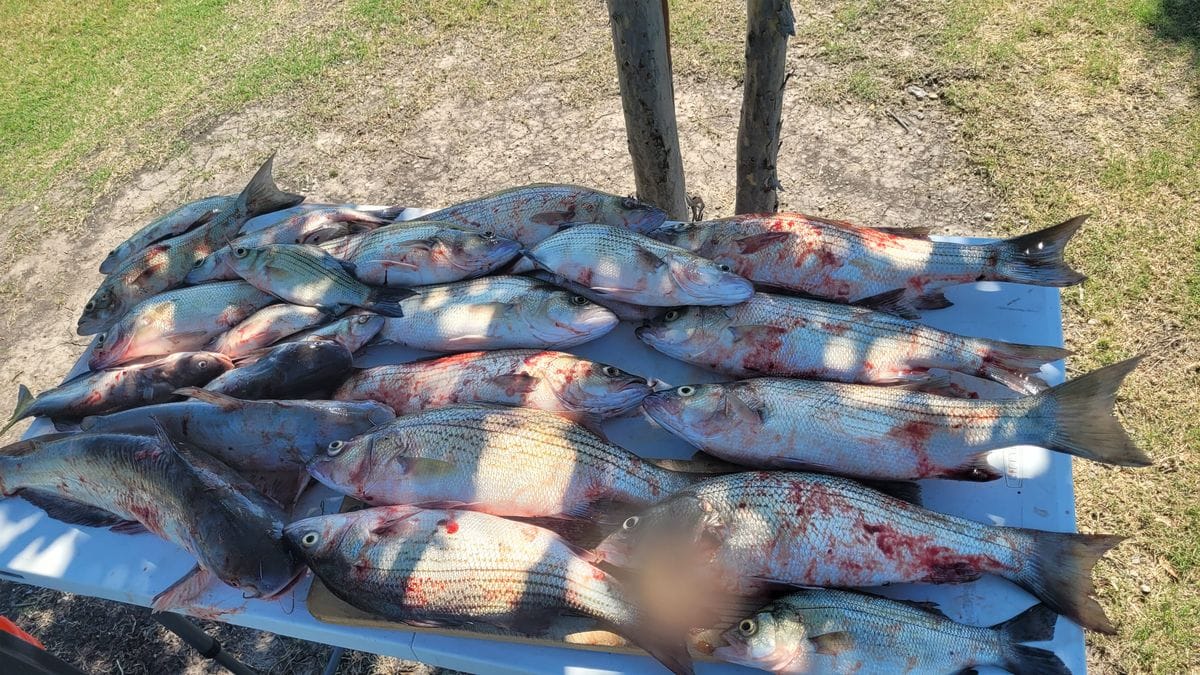
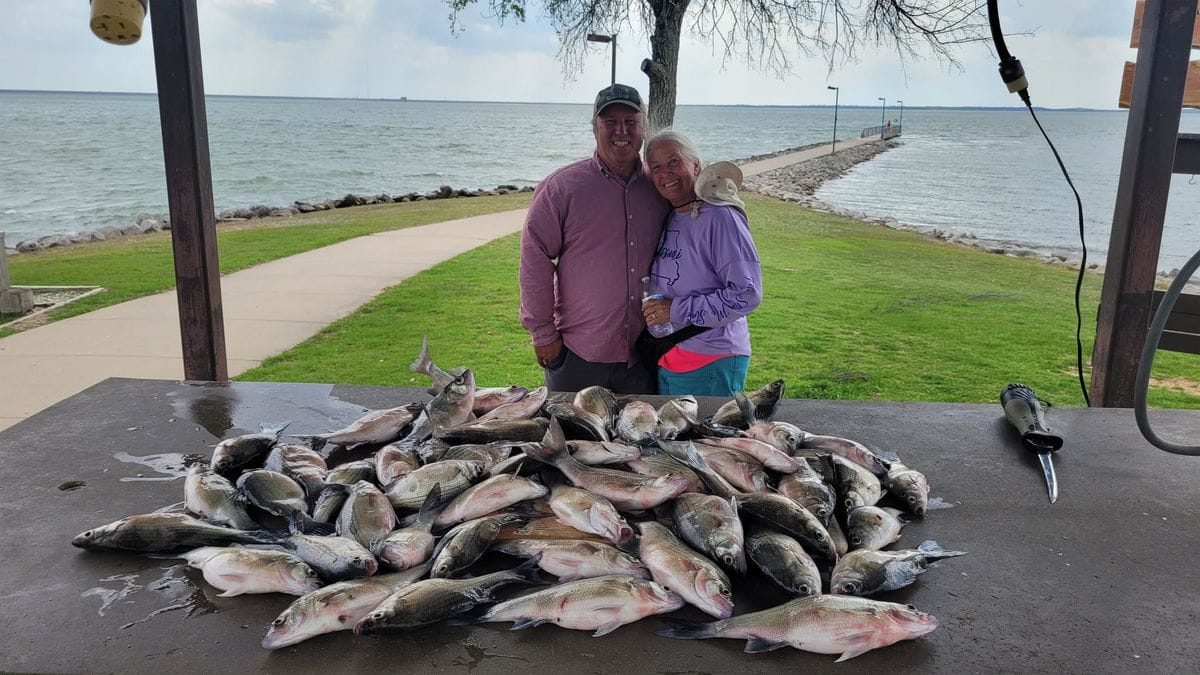
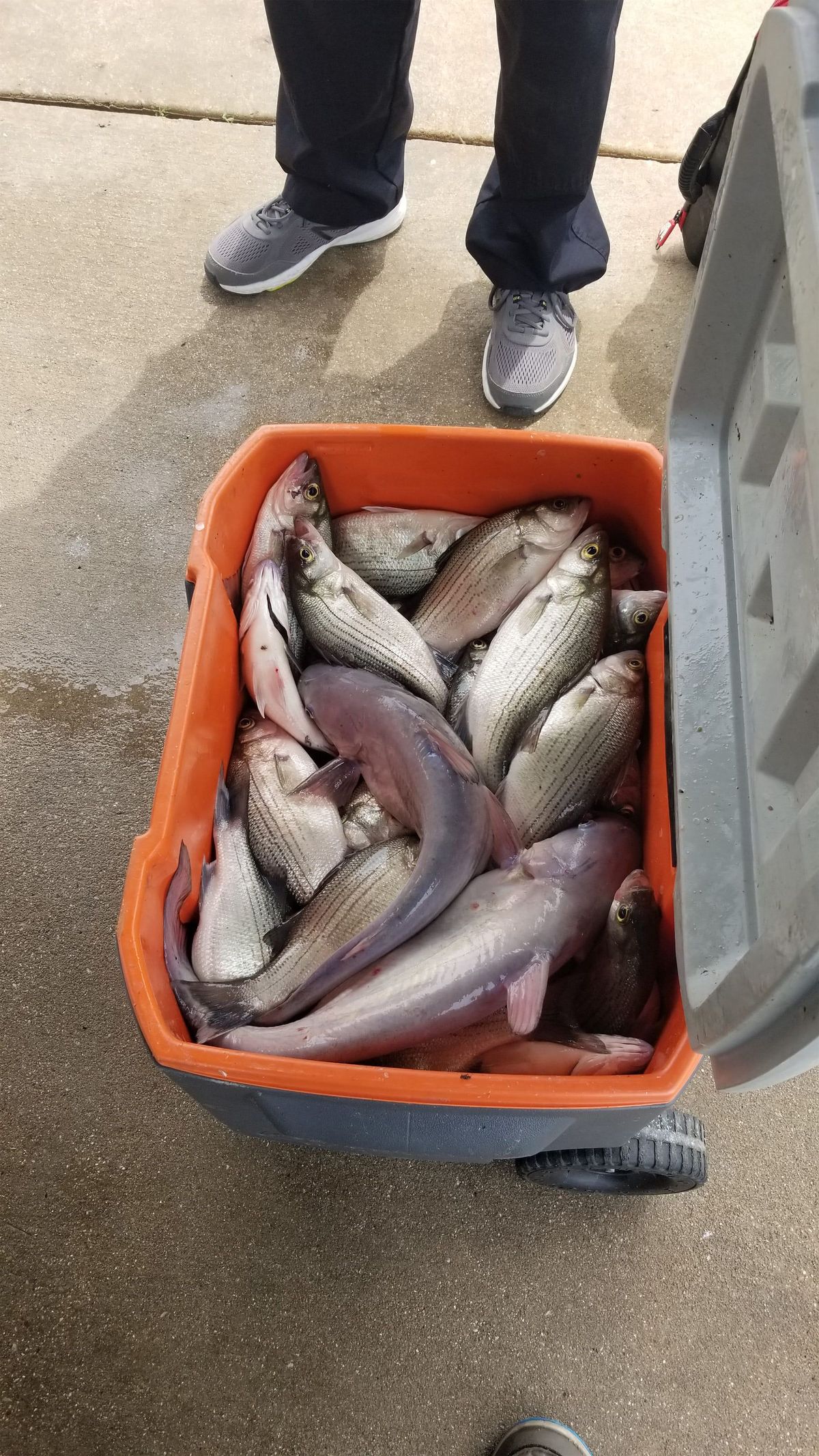
Catfish are the reason I started bringing clients here. Channel cats are the everyday fish, 2 to 5 pounds most of the time, with bigger ones into the teens after dark. Blue catfish run heavier when you find them, 10 to 20 pounds is normal and bigger fish are around. Flatheads push 40-plus, with bigger ones if you put in the night-bait time. And like I said, they all taste better out of this lake than anywhere else I've fished in Central Texas. I'll stand by that. Summer nights are when it gets real... the big ones move after dark, and a bent rod at midnight on a quiet lake is hard to beat.
Crappie show up strong in spring. Mostly white crappie. They stage on brush piles and standing timber in 4 to 12 feet of water, and from about February through April the crappie bite stacks up fast. The lake's small enough that finding the right brush piles is half the work, and the low pressure means the schools haven't been pounded the way Whitney's get.
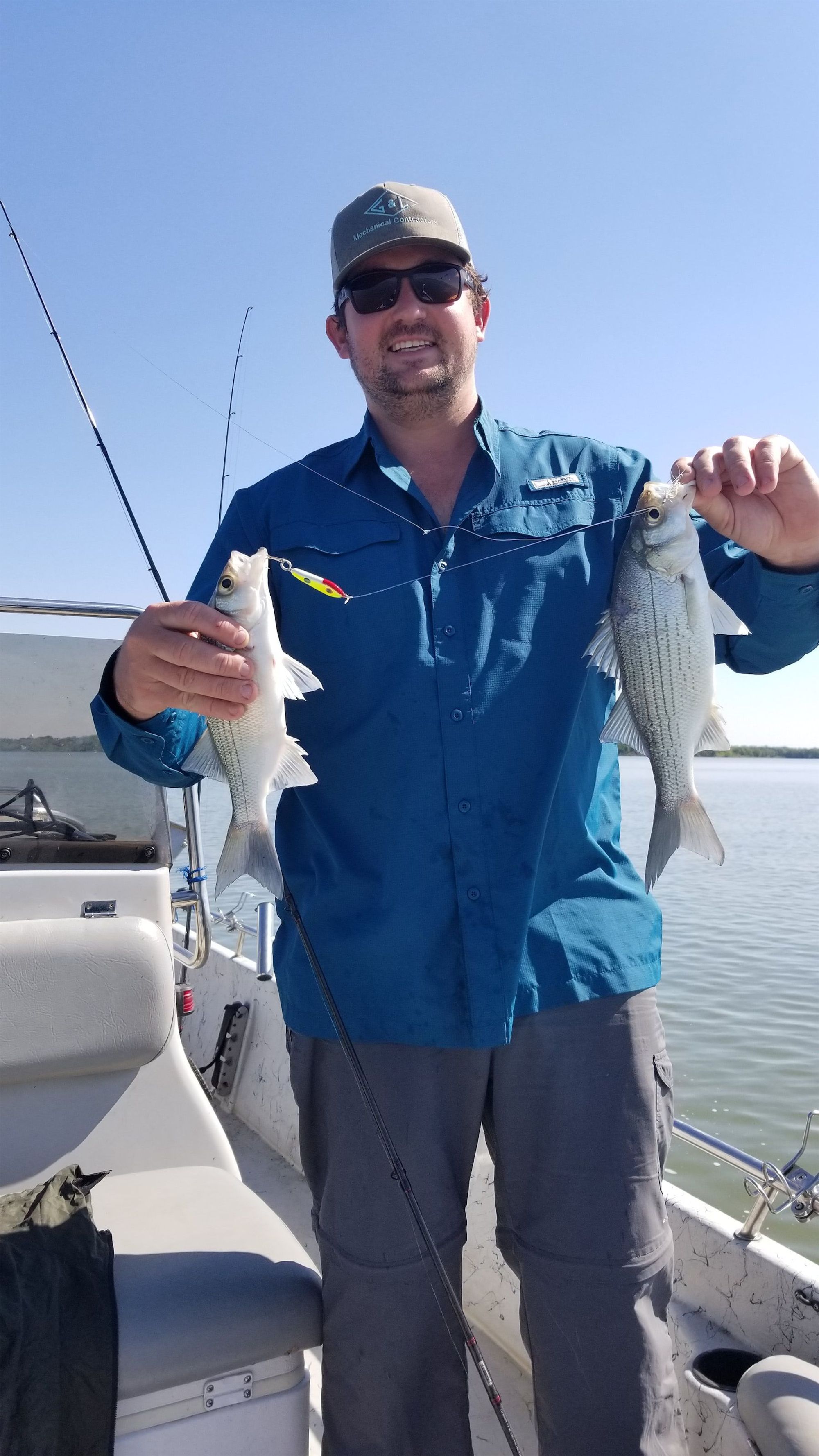
White bass make runs into the creek channels when the water warms up in spring. Schools of them. When you find them, you'll know, they're not subtle. They hit anything that moves and they fight harder than they should for their size.
Bluegill are here all summer. If you're bringing kids, this is your play. They bite on anything... crickets, worms, a piece of bread if that's what you've got. No minimum size, no bag limit, and a kid who catches 20 of them off a dock is going to talk about it for weeks. Pan-fried bluegill is also sneaky good eating if you've never tried it.
Stripers, they're around, stocked by TPWD on and off. But I wouldn't come here for stripers specifically. That's Whitney's thing. If you hook one on Aquilla, consider it a bonus.
When to Come
Spring (March through May). This is it. Everything's spawning or about to. Bass go shallow and get stupid. Crappie stack on brush. White bass school up in the creek channels. Water's in the 50s to low 70s. If you're going to fish Aquilla one time, make it April.
Summer (June through August). It's catfish season, plain and simple. Water's in the 80s, bass go deep and get moody. But the channel cats and flatheads turn on, especially after dark. I run night trips through summer. You show up at sunset, we fish into the dark. Nothing else like it. Bluegill are also on fire through summer if you want a daytime option with kids.
Fall (September through November). The sleeper. Bass get aggressive again. They push shallow chasing shad, and reaction baits start working, spinnerbaits, lipless cranks. White bass school up along the channels. October on Aquilla is genuinely underrated. Less people, cooler air, fish that cooperate.
Winter (December through February). Slower, but not dead. Crappie go deep, 20 feet and below, and you have to work for them with vertical jigs. It's methodical fishing. Not for everyone. But the crappie are fat from fall feeding and the lake is basically yours. I've had winter mornings out here where the only sound was the coffee thermos opening.
Getting There and Getting On the Water
I should warn you, Aquilla doesn't hold your hand. There's no marina, no bait shop on the water, no slip rental. It's a Corps of Engineers lake with a ramp and some picnic tables. That's part of why it's good.
Lake Aquilla Park is your main spot, 100-acre day-use area with a boat ramp, restrooms, and picnic areas. The ramp's fine for most trailer boats, but check water levels before you drive down. Low water can make things interesting.
There's another ramp near the dam on the south end. Basic, but it works.
Nearest towns: Hillsboro is about 15 minutes and has gas and food. Clifton is 20 minutes west. Waco is 40 minutes south. From Fort Worth, you're looking at about an hour and a half. It's doable as a day trip if you leave early, but if you want dawn and dusk fishing, grab a room in Hillsboro the night before.
Bring what you need. This isn't the kind of lake where you forgot sunscreen and there's a store at the marina. There is no marina.
How It Stacks Up Against Whitney
I fish both. People ask me all the time which one's better, and the honest answer is they're different lakes for different days.
**Size**; Aquilla: ~2,500 acres; Whitney: 23,000 acres
**Boat traffic**; Aquilla: Almost none; Whitney: Moderate to heavy
**Trophy stripers**; Aquilla: Not really; Whitney: Absolutely, it's the main draw
**Catfish quality**; Aquilla: Best eating I've found; Whitney: Very good
**Family-friendly**; Aquilla: Extremely, quiet and simple; Whitney: Good, but busier
**Infrastructure**; Aquilla: Basic ramps, that's it; Whitney: Marinas, rentals, the works
**Drive from Fort Worth**; Aquilla: ~80 miles; Whitney: ~65 miles
Whitney is my bread and butter. Big stripers, deep structure, more variety. If you want a striper trip, that's where we go.
Aquilla is where I go when I want less. Less noise, less pressure, less complication. If you want catfish that taste better than they have any right to, or you want a relaxed morning where you're not competing with jet skis, Aquilla's the move.
Both are good. They're just good at different things.
Rules and Limits
Standard Texas statewide regulations. Nothing weird.
Species: Largemouth bass; Daily Bag: 5; Min. Length: 14"
Species: Catfish (channel/blue combined); Daily Bag: 25; Min. Length: No minimum
Species: Flathead catfish; Daily Bag: 5; Min. Length: 18"
Species: Crappie (combined); Daily Bag: 25; Min. Length: 10"
Species: White bass; Daily Bag: 25; Min. Length: 10"
Species: Bluegill/sunfish; Daily Bag: No limit; Min. Length: None
You need a Texas fishing license if you're 17 or older. Residents, it's $32 a year. Non-residents, $58 or you can grab a one-day for $18. Under 17 and over 65 fish free. Buy it online at tpwd.texas.gov, takes five minutes and saves you a conversation with a game warden you don't want to have.
Why Fish Here With a Guide
Almost nobody guides on Aquilla. On Whitney, there's a handful of us competing for the same striper clients on the same water. On Aquilla, it's basically just me.
That means the local knowledge advantage is real. I know which brush piles hold crappie in March. I know the channel ledges where the flatheads sit in summer. I know where the bass stack when the water drops in fall. That's not stuff you're going to find on a forum or a YouTube video, because nobody's making content about this lake.
I bring all the tackle, all the bait. I clean your fish and bag them at the end. You show up with a license and sunscreen. If you've never fished with a guide before, Aquilla is a low-pressure place to start. The lake is calm, the crowds are zero, and the fish are willing.
Common Questions
Is Lake Aquilla actually good for fishing? Yeah. Not "good for a small lake," actually good. The bass are healthy, the catfish are outstanding, and the crappie fishing in spring punches above its weight class. The low pressure is a real advantage. Fish that don't see a lot of lures eat with a lot less suspicion.
What should I throw? Depends on what you're after. Bass, soft plastics around the timber, crankbaits along the points. Catfish, chicken liver for channels (the scent gets moving fast in warm water), cut shad for blues, live bluegill if you're going after flatheads. Crappie, small jigs, 1/32 to 1/16 ounce, chartreuse or white, dropped right next to brush piles. Or just use minnows. Minnows work for everything.
Are there stripers? TPWD stocks them sometimes. You might catch one, especially fall or winter near the deeper channel stuff. But if stripers are your thing, I'd point you to Whitney.
How big are the catfish? Channels are mostly 2 to 5 pounds, with bigger ones into the teens after dark. Blue cats run heavier, 10 to 20 pounds is normal, and bigger fish are around. Flatheads push 40-plus. And they all taste better out of this lake than anywhere else I fish. Cooler water, denser meat.
Come Fish It
I'm one of the few guides running trips on Aquilla. I fish here because it produces, because my clients enjoy themselves, and because the whole experience is different from a day on a crowded reservoir. No jet skis. No tournament traffic. Just fishing.
If you want to see what this lake actually has, book a trip. I'll put you on fish.