I get this question on the phone before every trip. What should I bring? The short answer is less than you think. I provide all the fishing gear. Rods, reels, tackle, bait, fish-cleaning. Most of what you're packing is for being comfortable on a boat for several hours, not for the fishing itself.
Here's the actual list, in roughly the order I'd think through it.
The Short Version
If you read nothing else: license, sunscreen, hat, sunglasses, water, snacks, a layer for early morning, and a cooler for fish if you're keeping them. That's it. Everything else is detail.
Texas Fishing License
You need one if you're 17 or older. Residents pay around $32 a year. Non-residents around $58 annually, or you can buy a one-day for about $18. Buy it online at tpwd.texas.gov before you come. Takes five minutes. The fine for fishing without one is way more than the license cost, and the game wardens do check.
Kids under 17 don't need one. Adults over 65 fish for free.
I can't sell you a license. You have to handle this part yourself.
Sunscreen and Sun Protection
This is the one thing people underpack and regret. Lake Whitney sun is brutal, even on overcast days. The water reflects everything back at you and you'll burn faster than you think.
SPF 30 minimum, 50 is better. Put it on before you leave the dock. Reapply at lunch. If you're fair-skinned, reapply twice. The middle of the day is when you'll think you don't need more, and that's exactly when you do.
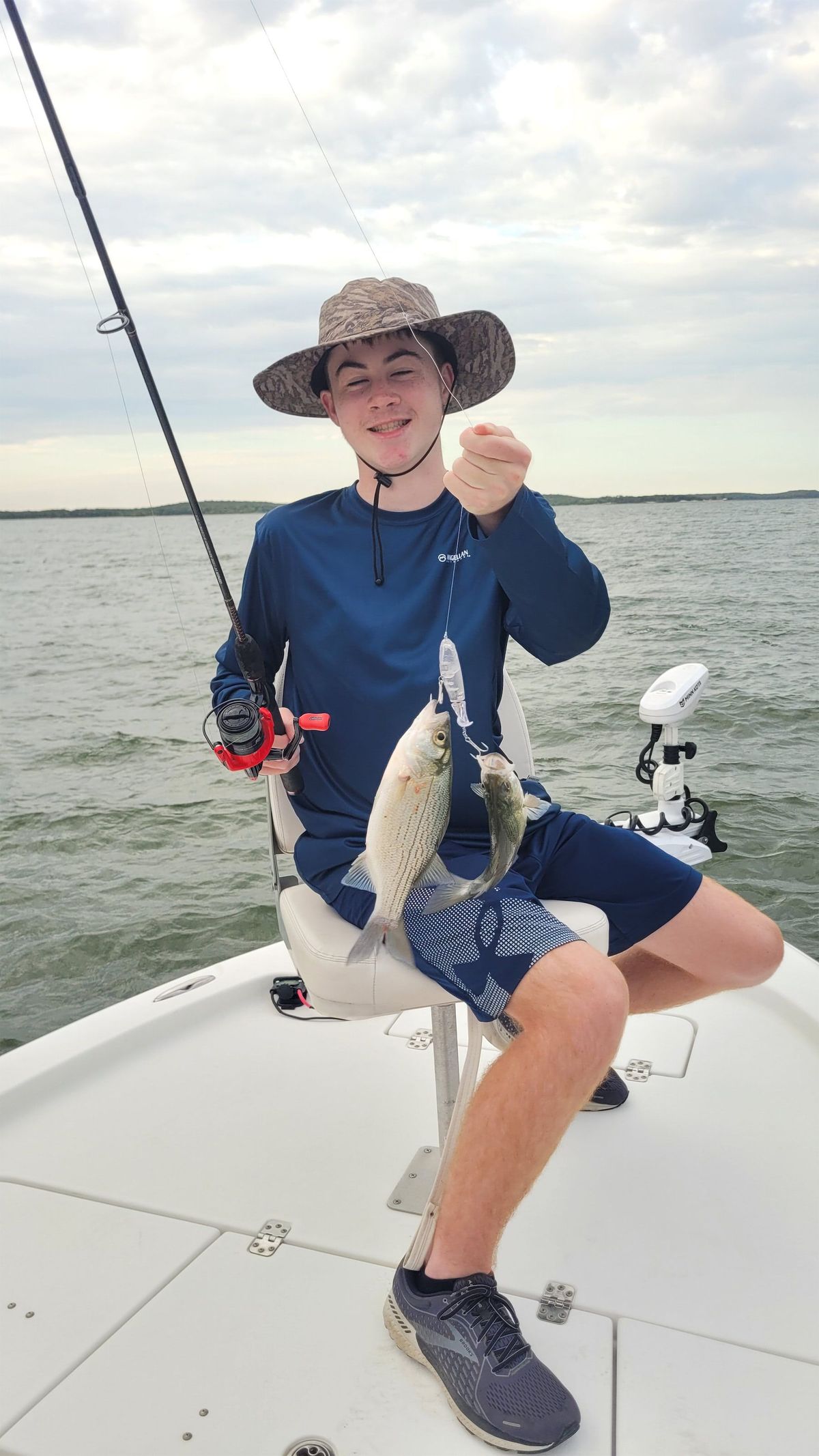
A hat with a brim is essential. A fishing hat with a flap covering the neck is better. A regular ball cap is okay but your ears and the back of your neck are exposed.
Polarized sunglasses. You can't see into the water without them and you'll squint all day. Any cheap pair will do, but make sure they're polarized.
Long sleeves are an option, especially the lightweight sun-protection shirts. They look funny but they work. I wear one most summer days.
Clothes
The boat is windy and the morning is cool, even in summer. Layers matter.
In summer (May through September), I'd bring a light long-sleeve shirt or a fishing sun shirt, shorts or lightweight pants, and a brimmed hat. You'll start cool and warm up. Closed-toed shoes that you don't mind getting wet. No flip-flops. The boat deck gets slippery and you don't want to lose a sandal trying to land a fish.
In spring and fall (March, April, October, November), bring a fleece or a light jacket for the morning. Long pants. Closed-toed shoes. You can shed the layer by 10 AM if it warms up.
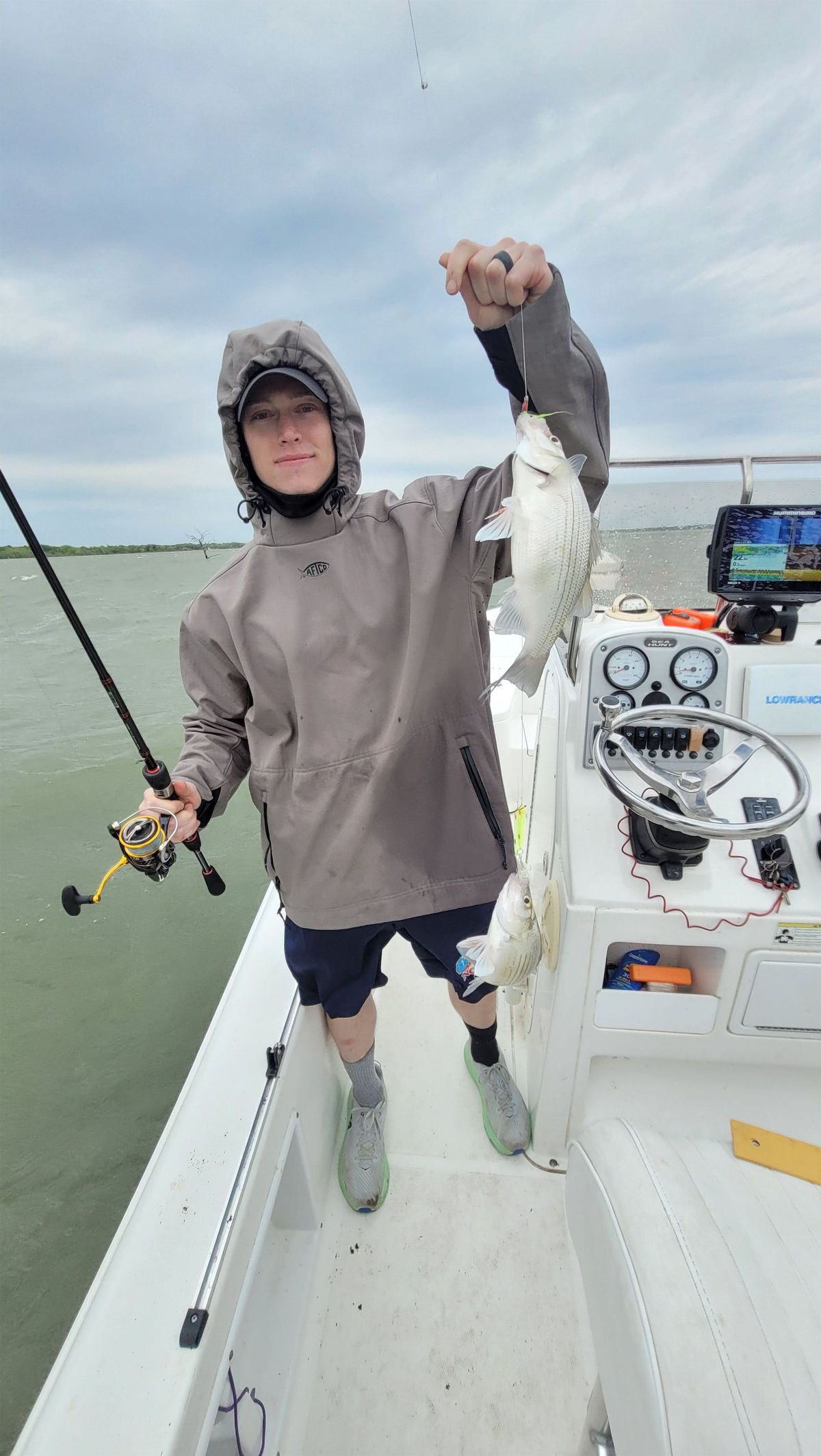
In winter (December through February), dress like you're going hunting. Insulated jacket, beanie, gloves, warm boots. Whitney mornings in January can be in the 30s with wind chill. The fishing is great. The cold is real.
Don't wear anything you'd be upset about getting wet, dirty, or smelling like fish.
Food and Drinks
I don't provide lunch. You're responsible for whatever you want to eat and drink on the boat.
Water is the most important. Two bottles per person minimum on a half-day. More in summer. Dehydration on a hot boat is the fastest way to ruin a trip.
Sodas, sports drinks, whatever else you want is fine. I don't care if you bring beer for an afternoon trip as long as you're not getting drunk on the water. Glass containers aren't great on a fishing boat. Cans are better.
Snacks: sandwiches, granola bars, jerky, fruit, whatever travels well. Nothing that needs heating. The boat has a cooler section for your stuff. You don't need to bring your own cooler unless you want one for fish.
Cooler for Fish
If you want to keep what you catch, bring a cooler. I'll clean, bag, and ice your fish for you. But you need somewhere to put the iced bags on the drive home.
A regular soft-side or hard-side cooler works. Bigger than you think you need is better. A morning of catfish or stripers can fill a cooler fast.
If you're not planning to keep fish, no cooler needed. We can release everything.
Phone, Wallet, Keys
Bring them. Phones for photos especially. But understand they might get wet, splashed, or dropped overboard. I've seen it happen.
A waterproof pouch or a Ziploc bag for your phone is smart. The boat has some dry storage but not unlimited. Anything you absolutely don't want wet goes in a bag.
Keys, wallet, and any other essentials can stay in a dry compartment on the boat during the trip. Don't leave anything visible in your truck at the ramp. Lock it up.
What Not to Bring
Don't bring your own fishing rods unless you've talked to me about it ahead of time. I've got the right gear for this lake. Adding your own setup just clutters the boat.
Don't bring bait. I handle bait. Bringing your own is unnecessary.
Don't bring a heavy backpack. A small daypack is plenty. The boat has limited storage and a giant pack just gets in the way.
Don't wear all-cotton in cold weather. Cotton holds moisture and gets cold fast. Fleece, wool, or synthetic layers are better.
Don't wear new boat shoes you haven't broken in. Blisters on a fishing trip are miserable.
What I Bring So You Don't Have To
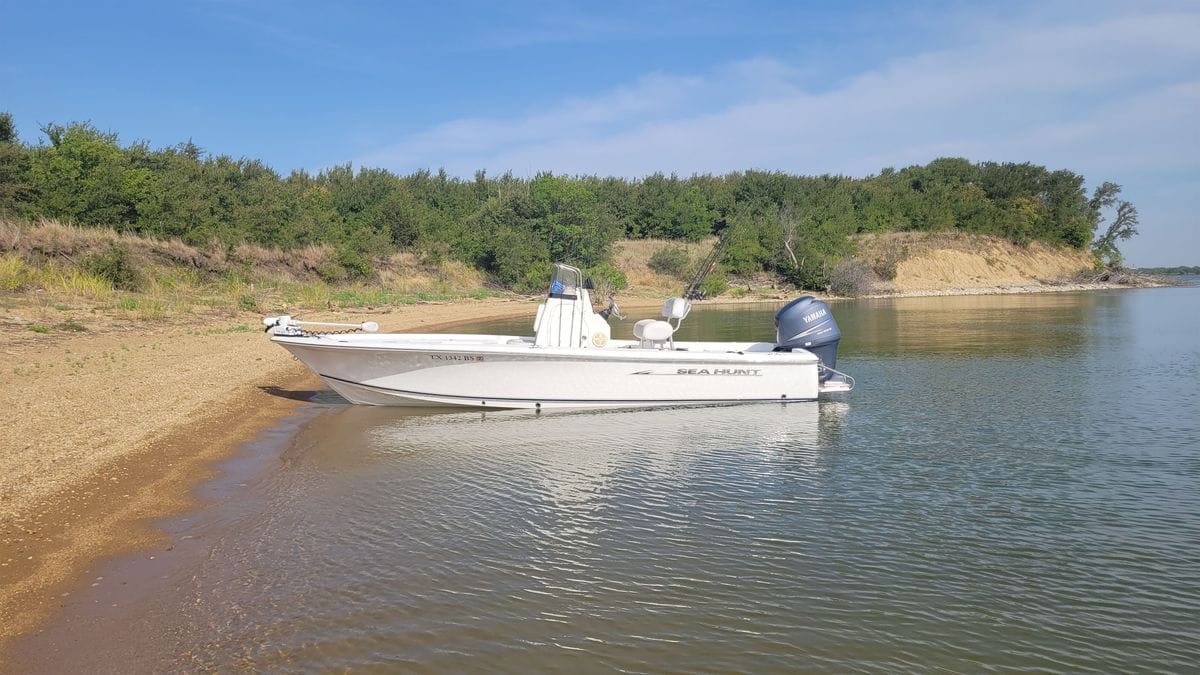
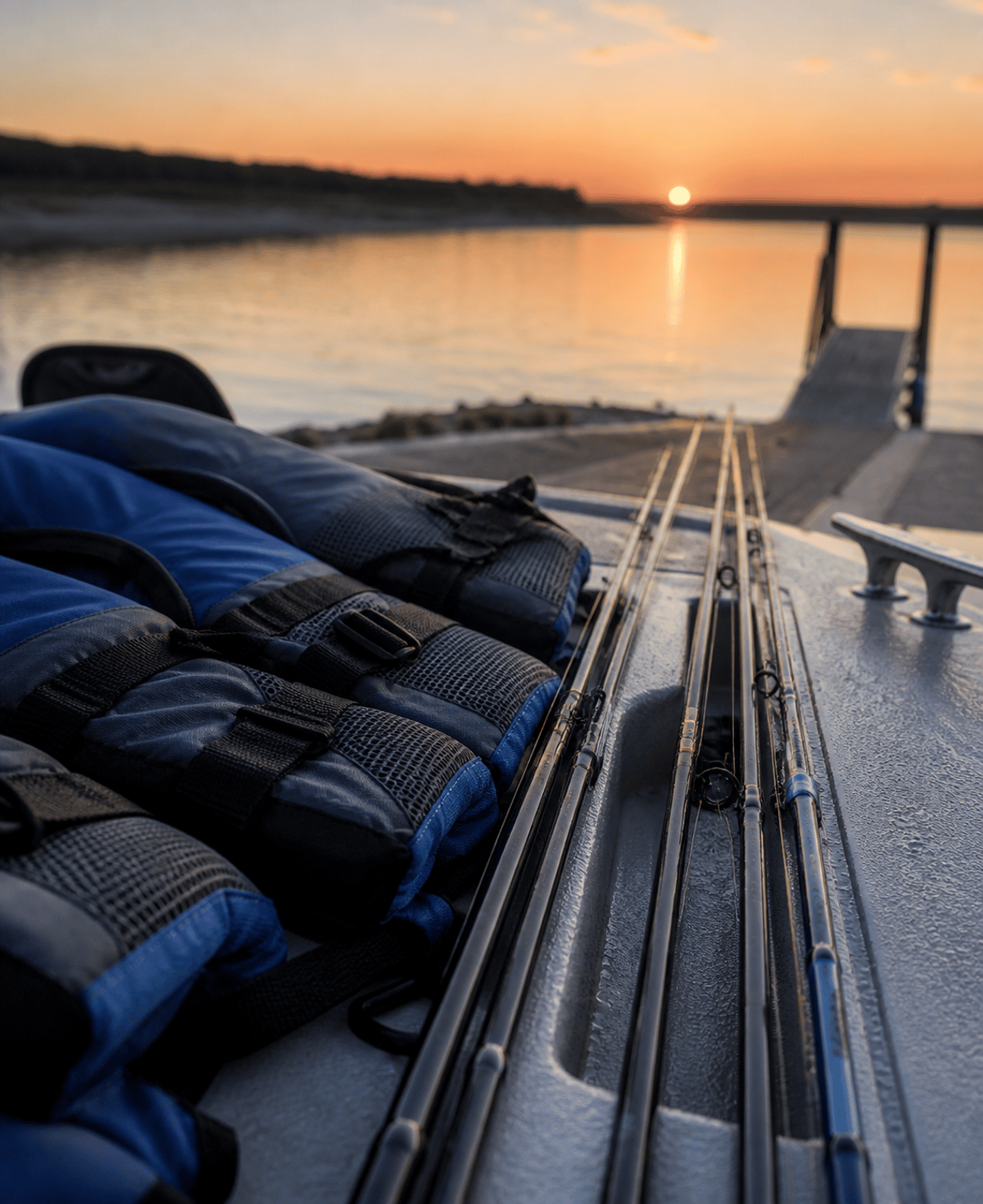
Just so it's clear: I bring the rods, reels, tackle, terminal gear, hooks, weights, lures, jigs, bait (live or cut depending on the trip), the fish finder, the trolling motor, the boat, life jackets, a cleaning station setup, fish bags, ice for the fish, and years of fishing Texas lakes. Started on Ray Roberts. Worked my way down to Whitney. Built 5 Alarm Fishing around the striper fishery here.
You bring yourself, your license, and what's on the list above.
Book a Trip
When you book, I'll text you the meeting point and time the night before. Show up about ten minutes early. Bring what's on the list. Leave the rest.
It's a fishing trip, not a moving job. Less is more.