Everybody asks me the same question. "When should I come?" Like there's a magic weekend where everything turns on and the fish line up to get caught. There's not. But there is a pattern, and I've watched it close enough to tell you what's likely biting, how deep, and what to throw... for any month you pick.
The short answer is there's always something worth catching on Whitney. The longer answer is which species, and that depends almost entirely on water temperature. Temperature moves the fish. It triggers spawns, pushes them deep, pulls them shallow, makes them aggressive or makes them sulk. Once you understand that, the calendar makes sense.
This isn't a fishing report. Reports are snapshots. This is the pattern, month by month, from January cold to August heat and back again.
How to Use This Calendar
Water temperature is the engine. I'm giving you typical ranges for each month, but weather does what it wants. A warm February pushes the spring bite early. A cool front in October can turn stripers on two weeks ahead of schedule. Use the temps as your guide, not the calendar date.
I've listed the primary species for each month, what depth range to expect, and what I'm throwing. If you're planning a trip and want to know what you're walking into, this is it.
January: Deep and Slow
Water temp: 40-50 degrees F
January is quiet. The lake is empty, the water is cold, and most people are watching football. That's fine. More water for us.
Stripers are the play. They're holding deep, 30 to 50 feet, tight to channel ledges and main lake structure. Vertical jigging with 1 to 2-ounce spoons, slow lift and fall. They're not chasing anything. You have to put it right on their face. Live shad slow-drifted along the channel works too, but it's a patience game.
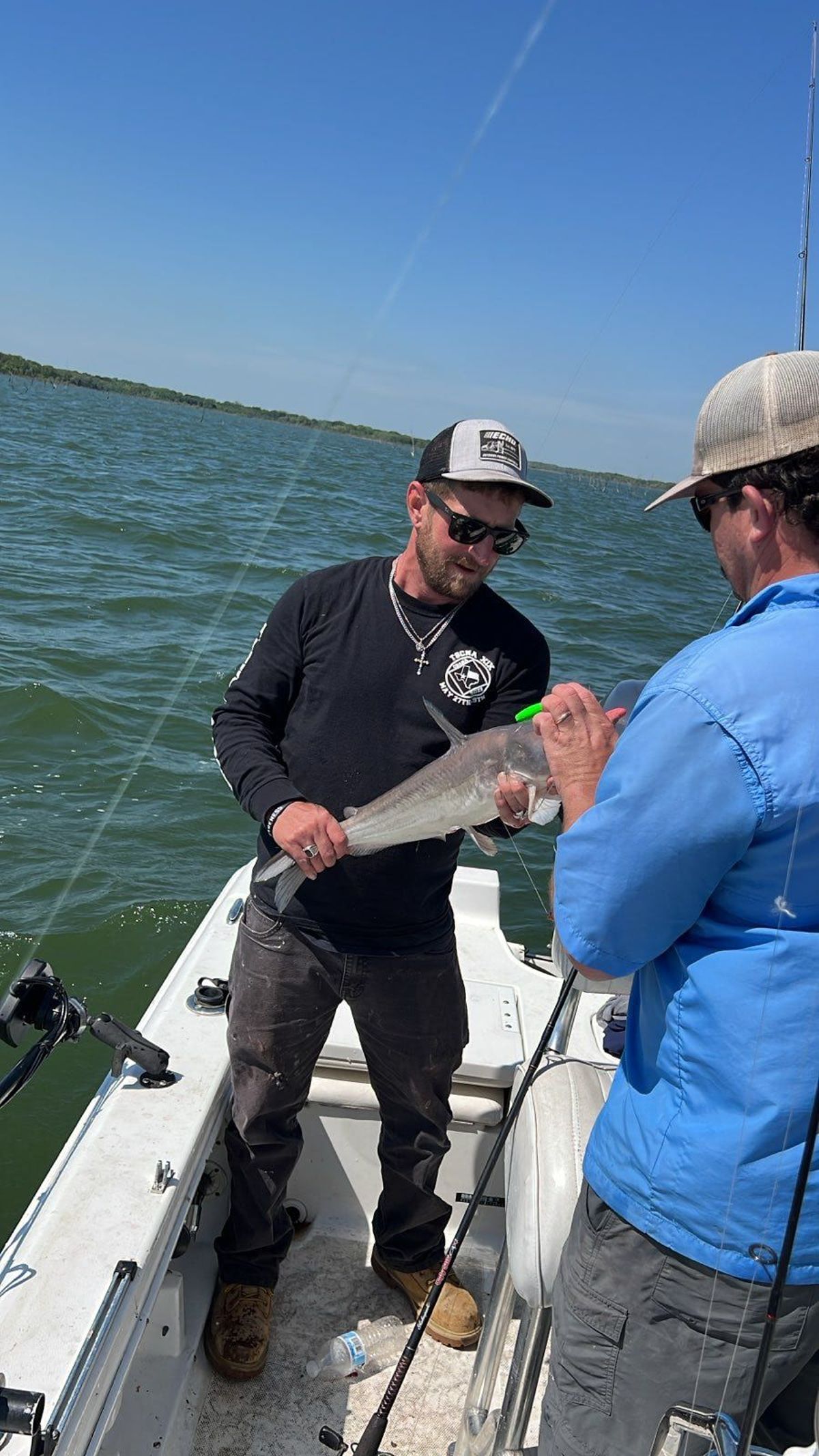
Catfish are still feeding. They don't shut down in cold water the way people think. Night trips produce channel cats on cut shad along the deeper holes. Not fast action, but the fish are usually bigger. Cold water seems to favor the larger ones.
Bass are deep and lethargic. You can catch them, but it's work. Jigs dragged along deep points, maybe a suspending jerkbait if you've got the patience. Most days I'm not targeting them in January.
Best time of day: mid-morning through early afternoon, when the water has had a couple hours to warm even half a degree. That matters when you're at 45.
February: Things Start Moving
Water temp: 45-55 degrees F
February is when you start feeling the shift. Not in the air, necessarily. In the water. And the crappie feel it first.
Crappie start staging toward shallow structure. Docks, brush piles, standing timber. They're not spawning yet, but they're thinking about it. Water needs to hit 55-60 before they commit, and February is the approach. Small jigs, 1/32 ounce, white or chartreuse, dropped right next to brush. Or just tie on a minnow. Minnows don't care about technique.
Stripers are still active in the 45-55 range. Same deep patterns as January, but they start moving more. You'll find them suspended over channel drops instead of glued to the bottom. That's a good sign. They're starting to feed with a little more aggression.
If we get a warm stretch that pushes water into the mid-50s, you'll see white bass start staging in the creek channels. Early yet, but it happens some years.
March: The Switch Flips
Water temp: 55-65 degrees F
March is probably the most diverse month on Whitney. Everything is waking up at once.
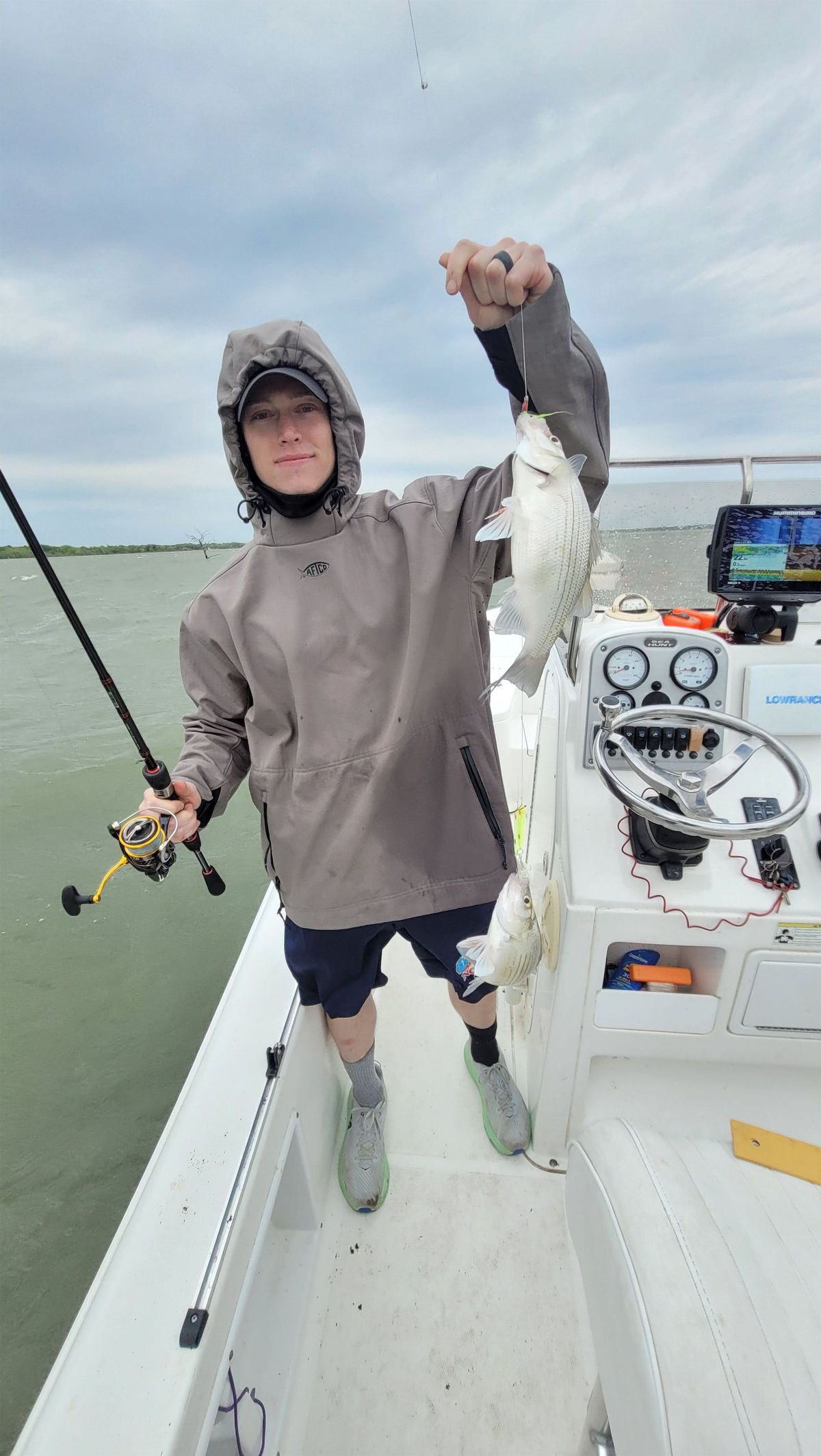
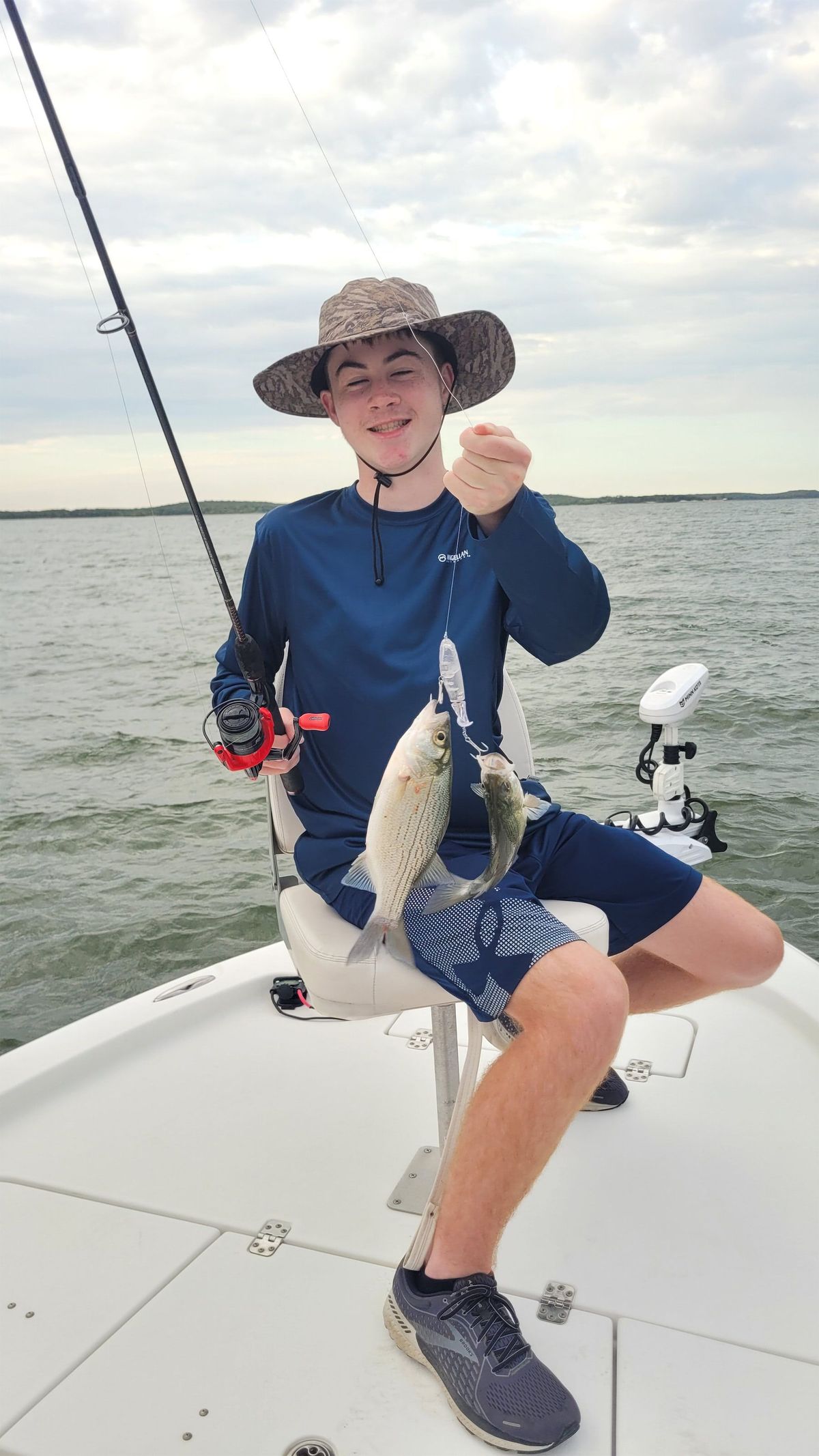
White bass are running. When the water crosses 55, they push into tributary creeks and the schools are absurd. Fifty, a hundred fish schooled up, hitting anything that moves. Small shads, crankbaits, jigging spoons. When you find a school, you don't leave. This is some of the most fun fishing on the lake, pure action.
Crappie hit the spawn window. 55 to 60 degrees and they're on beds in 3 to 10 feet of water, tucked up against brush piles, docks, bridge pilings. This is when I catch crappie clients their limits. Small jigs, slow drops, or minnows fished under a slip float.
Bass are spawning or about to. Water hits 60 and they move shallow, 3 to 8 feet, building beds on flats. Soft plastics, crankbaits, topwater early and late. They're aggressive and territorial.
Stripers are still in their comfort zone at 55-65. This is prime range for them. You'll find them transitioning from winter deep patterns toward their spring spawning runs up the Brazos tributaries.
If you want variety, March is the month. You might catch four species in a day without trying that hard.
April: Peak Spring
Water temp: 60-70 degrees F
April is the month I'd send my mother fishing. Everything is active. The water's comfortable for every species in the lake, and most of them are either spawning, just finished spawning, or feeding like they're about to.
Stripers are running. They push into tributaries to spawn in March and April, and the action around creek mouths and channel intersections is as good as it gets. Live shad fished along the channels. Topwater at dawn if you're lucky enough to find a school on the surface.
Bass are post-spawn by mid-April. They're hungry and a little dumb. Reaction baits, crankbaits, spinnerbaits. They'll hit things they shouldn't.
Crappie are still on beds early in the month, then they scatter. Get them in the first two weeks if you can.
White bass are wrapping up their runs. Catfish are starting to ramp up as the water climbs through the 60s.
Families do well in April. The weather's decent, the fish are cooperative, and nobody's fighting heat yet. If someone tells me they've never fished and they want to try it, I say April.
May: The Transition
Water temp: 68-78 degrees F
May is the handoff between spring and summer. The spawn is done for most species. Now it's about feeding and positioning for the heat.
Bass are post-spawn and recovering. They pull off the shallows and set up on secondary points and channel swings. Texas-rigged plastics, Carolina rigs, crankbaits along the ledges. Not as easy as April, but still solid.
Catfish are turning on. As the water pushes past 70, channel cats and blues get more and more active. Cut shad, chicken liver, punch bait. They're moving up from the deep winter holes toward channel ledges and flats. This is the beginning of catfish season for real.
White bass are still schooling if you can find them, but the big spring runs are over. They settle into main lake patterns, hanging around ledges and channel drops.
Stripers start moving deeper as the water warms past their comfort range. Mornings and evenings they'll still chase topwater, but by mid-May they're spending most of the day at 20 feet and below.
June: Summer Sets In
Water temp: 75-82 degrees F
Summer fishing on Whitney is a different game. The fish that like cold water go deep. The fish that like warm water come alive.
Catfish are the headliner now. Night fishing is prime from June through September, and this is when it starts. Channel cats on chicken liver and cut shad, blues on fresh-cut shad or live bait, working channel ledges and deeper holes at 15 to 30 feet. Sunset through midnight is the window. The lake gets quiet, the catfish get busy.
Bass are deep. 20 to 40 feet, holding on structure, ledges, brush piles, anything with shade. Early morning topwater still works if you're on the water at dawn. By 9 AM you're going deep or going home. Carolina rigs, deep-diving crankbaits, football jigs.
Stripers are uncomfortable. Their preferred range is 50-70, and the surface is already past that. They push into the thermocline, 20 to 35 feet, and they're less aggressive. You can still catch them early and late, but midday is tough.
Bluegill are going off near docks and shallow brush. If you've got kids and you want an easy afternoon, this is the time. Crickets under a bobber, 2 to 6 feet of water. Doesn't get simpler.
July: Catfish and Commitment
Water temp: 82-88 degrees F
Peak summer. The water is hot, the air is hotter, and most species are deep and slow. Except the catfish.
July is peak catfish month on Whitney. Channel cats, blues, flatheads. All three are feeding hard. Night trips are the move. I run them from sunset into the dark, anchored over channel ledges and deeper structure, 15 to 40 feet. The big flatheads come out after midnight. They want live bait, live bluegill hooked through the back. The bigger the bait, the bigger the fish showing up for it.
Everything else is a grind. Bass are hunkered on deep structure, 25 to 40 feet, and they're not eager. Stripers are deep and sluggish, stuck below the thermocline trying to find water that doesn't stress them. Crappie scatter into deep brush and become hard to pattern.
Dock fishing for bluegill is still good. And honestly, a morning of panfishing with a kid beats a lot of other options in July.
Most of my summer clients are chasing catfish or stripers, and I don't blame them. Catfish because they're actually biting, stripers because people want what they want.
August: Holding Pattern
Water temp: 82-88 degrees F
August is July's twin. Same temps, same patterns. The lake is thermally stratified now. Warm water on top, cooler water deep, and a thermocline somewhere around 20 to 30 feet that everything keys on.
Catfish are still strong. Same night patterns, same baits, same depths. If anything, the flatheads get a little more active in late August. Something about that first hint that summer won't last forever.
Crappie are deep, 25 to 35 feet, suspended over or near brush piles. You can catch them if you have electronics and the patience to vertical jig. Most people don't bother.
Stripers are in survival mode. They're stacked in the thermocline, and a fish finder will light up with marks at 25-35 feet. The fish are there. Getting them to eat is another conversation. Slow-trolled live shad is about the best option. Some days they bite, some days they stare at it.
Late August, if we get a cool front that drops the surface temp even a few degrees, it can trigger a feeding window that feels like fall came early. Those days are gold.
September: The Turn
Water temp: 72-78 degrees F
September is the exhale. The water starts dropping out of the 80s, and you can feel the lake waking back up.
White bass are the first signal. They start schooling again along channel drops and main lake structure. When they're chasing shad on the surface, you can see the water boiling from a distance. Topwater comes back. Small shads, lipless cranks, anything flashy.
Catfish are still active. The pattern doesn't die overnight. Cut shad on channel ledges, same as summer, but the window extends past just night fishing. Mornings start producing again.
Bass feel the change. They're moving shallower, following the shad, getting more aggressive on reaction baits. Crankbaits along channel swings, topwater early and late, spinnerbaits through the first drop in water clarity after fall rains.
Stripers start to perk up. Water dropping through the 70s is approaching their happy range, and you'll see them push shallower and feed with more purpose. Not peak yet, but the trend is your friend.
September is transition. It's messy and exciting. The summer patterns aren't fully gone and the fall patterns aren't fully here, which means on a good day you can catch a little bit of everything.
October: The Best Month on Whitney
Water temp: 60-70 degrees F
I'll just say it. If you fish Whitney once a year, make it October.
The water drops into the 60s. That's striper paradise. 50 to 70 degrees is their preferred range, and when the surface temp lands squarely in it, they come up from the depths and feed like they've been starving. Because in a way, they have. Two months of thermal stress, and now the water feels right again.
Striper fishing in October is the best it gets. They school on the surface, chasing shad, breaking water, and you can see the birds working over them from half a mile away. Topwater plugs, bucktails, live shad. Some mornings you'll have fish blowing up around the boat for two hours straight. This is what Whitney is known for, and October is why.
White bass are schooling hard too. Same shad-chasing behavior. Find the birds, find the fish.
Bass are in full fall mode. They've moved shallow and they're aggressive, eating everything that resembles a shad. Lipless crankbaits, jerkbaits, topwater. This is easy fishing by bass standards.
The weather is perfect. Cool mornings, warm afternoons. The summer crowds are gone. The lake feels like it should.
Their loss.
November: Peak Striper, Cooling Water
Water temp: 52-60 degrees F
November is still prime striper season. The water cools through the 50s and the fish stay aggressive. The surface feeding windows get shorter as the water drops, but when they happen, they're intense. More jigging and deep work starts to mix in with the topwater.
This is trophy territory. The bigger fish feed more deliberately in colder water, and November tends to produce the largest fish of the year. Vertical jigging with heavy spoons along channel ledges, 20 to 40 feet. Live shad drifted along the same structure.
Bass are transitioning deeper. They'll follow the shad as it moves toward winter staging areas. Still catchable, but it's getting tougher. Jerkbaits and slow-rolled spinnerbaits.
Crappie start their fall secondary peak. They push toward deeper brush and docks, 15 to 25 feet, feeding up before winter. Good jig fishing if you know the brush.
The lake is quiet in November. No ski boats, no jet skis, no weekend warriors. Just fishermen and fish. Some of my favorite days guiding happen this month.
December: Winter Settles In
Water temp: 45-50 degrees F
Winter's here. The lake slows down, the mornings are cold, and the coffee thermos becomes the most important piece of equipment on the boat.
Stripers are still the target. They've moved into full winter pattern, holding deep, 30 to 50 feet, tight to channel structure and ledge drops. Vertical jigging is the primary method. Slow, methodical, lift and fall. These aren't the aggressive surface-feeding fish of October. They're calculated. But they're still eating, and a 20-pound striper on a jigging spoon in December is worth the cold hands.
Catfish are deep and slow but present. Cut shad on the bottom near channel holes. Not fast fishing, but winter catfish tend to run bigger.
Bass and crappie are deep, cold, and generally uncooperative. You can catch them, but you're working for it. Jigs on deep points for bass. Vertical presentations over deep brush for crappie.
December is for people who like fishing more than catching. The lake is yours. Trophy potential is real. And if you dress right, it's not that bad out there.
David's Honest Take
People want me to tell them the single best time to come. Here it is, broken down by what you're actually after.
Only come once a year? October. No contest. Stripers are feeding on top, white bass are schooling, bass are shallow and aggressive, the weather is perfect. It's the month Whitney earns its reputation.
Best value for your dollar? January or February. I have the most availability because everyone thinks fishing is over. It's not. Stripers are still there, the water's just cold. Fewer clients means I'm not booked out, you get more flexibility on dates, and the fish don't know what month it is.
Best for families or first-timers? April or May. Everything's biting, the weather is comfortable, the water's warm enough that nobody's miserable, and you've got the best shot at catching multiple species in one trip. Kids do well in spring.
Want trophy stripers? October through December. That's the window. The fish are in their preferred temperature range, they're feeding hard, and the biggest ones show up in late fall and early winter.
Catfish trip? June through August. Night trips, big fish, a different kind of experience. The lake at night is something else entirely.
I fish Whitney twelve months a year. Every month has something. Pick your species, pick your style, and come fish it. I'll tell you what's biting.