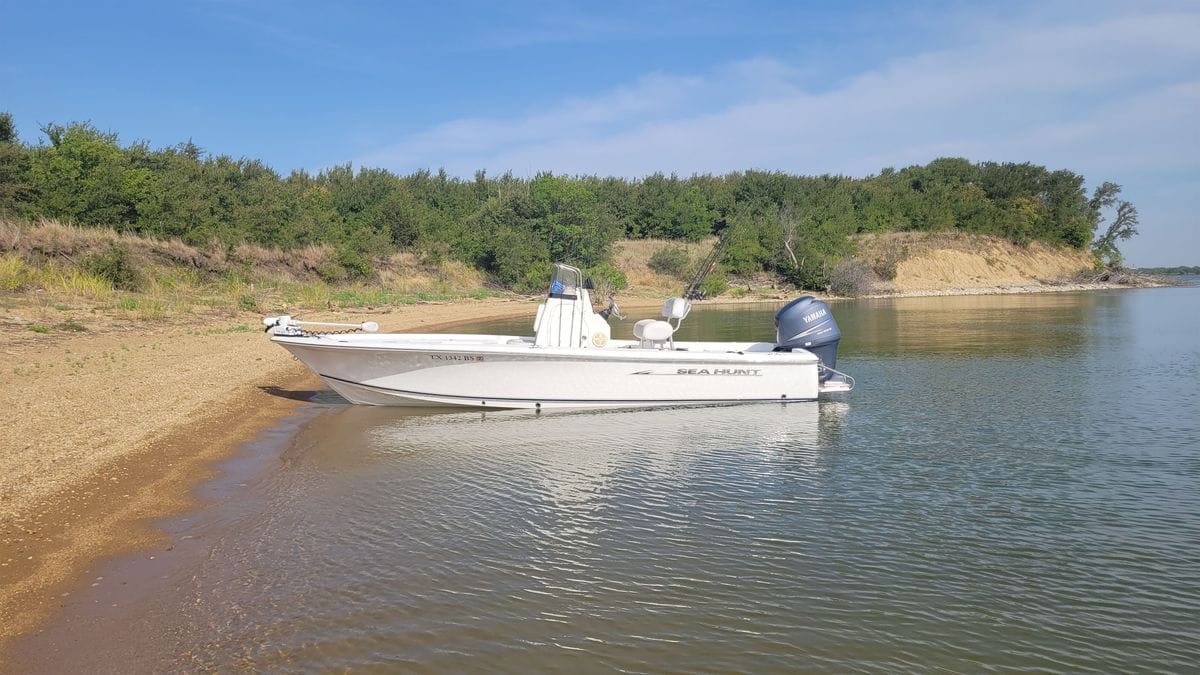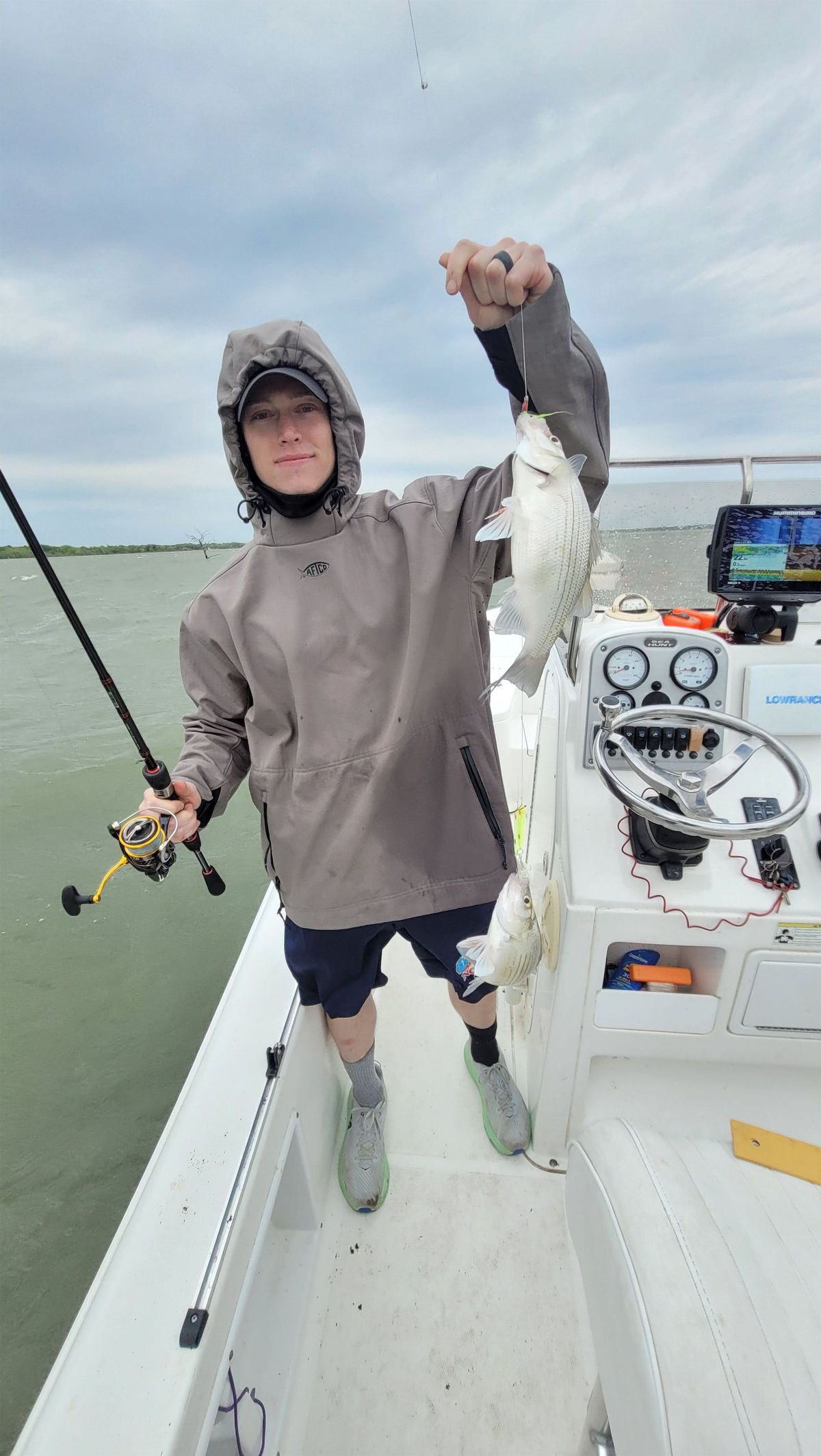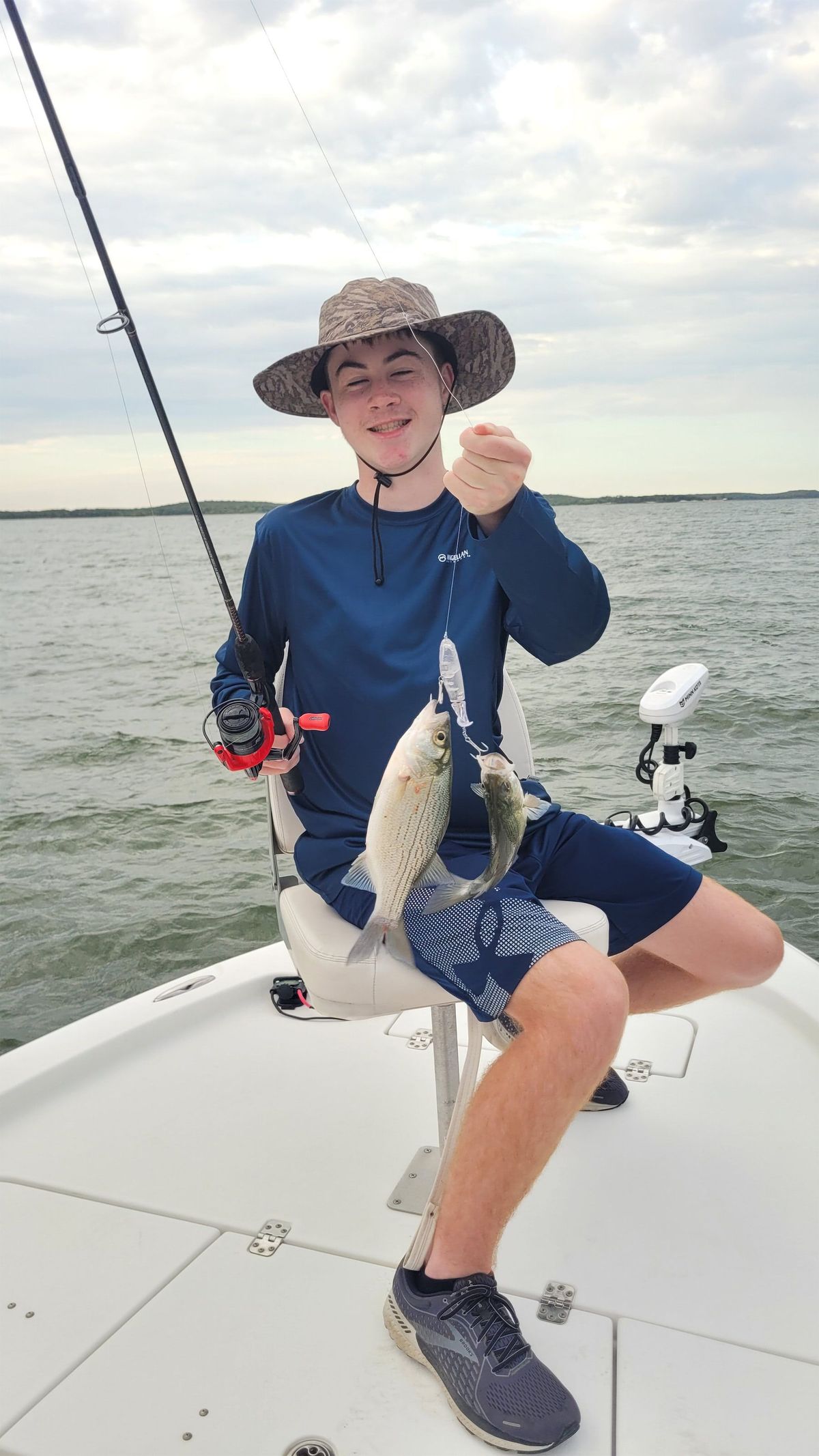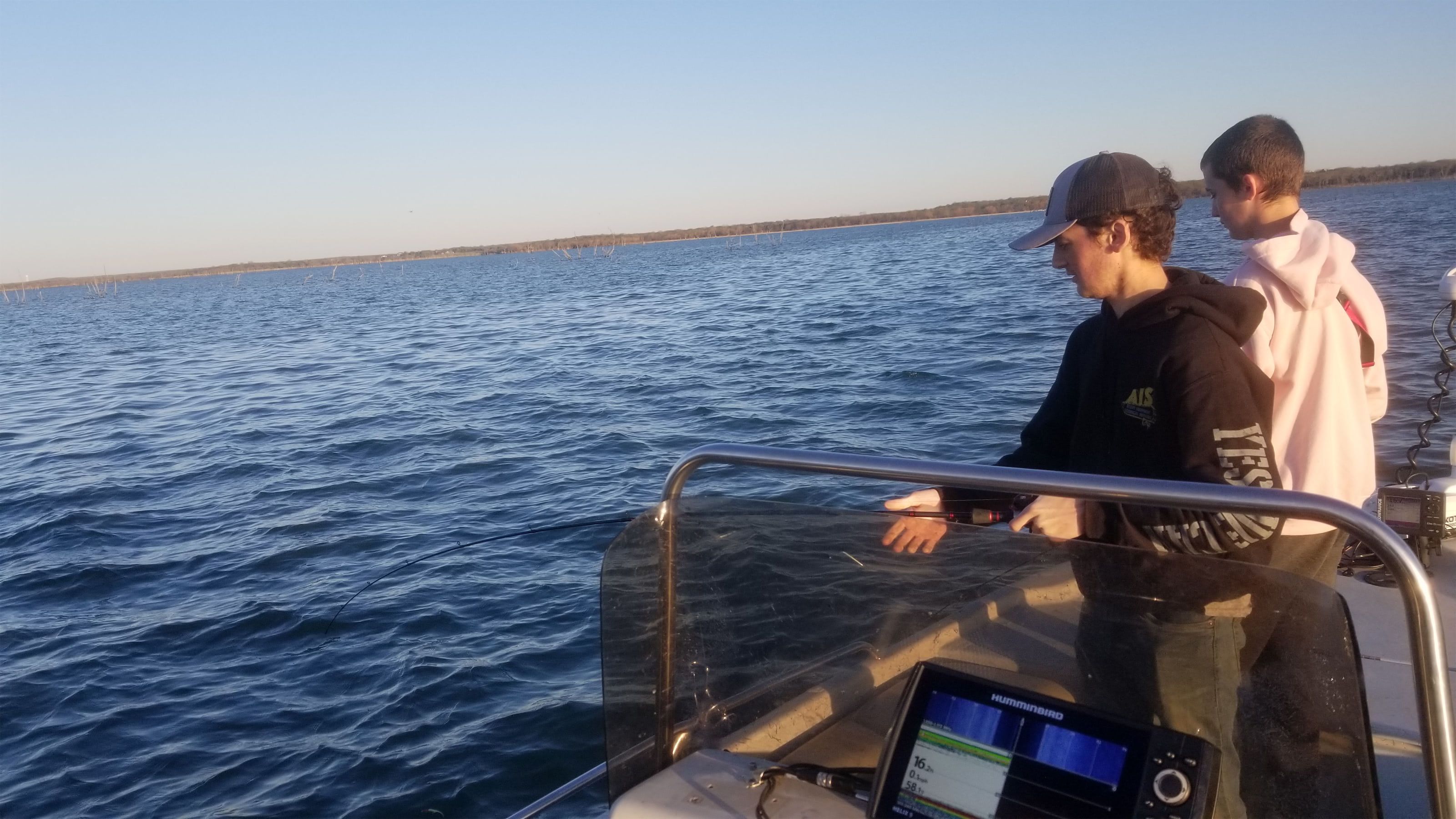
If you asked me what the most underrated fish in Lake Whitney is, I'd say white bass without blinking. Sandbass, whatever you want to call them. Every spring they run up the creeks and tributaries in schools big enough to make your drag scream, and most people are so locked in on stripers they don't even notice it's happening. Fine by me. Leaves more water for the handful of us who pay attention.
I'll fish white bass for fun on a day off. I don't do that with every species.
Why White Bass Get Overlooked on Lake Whitney
Whitney's got a reputation. Stripers. That's the fish people drive three hours to catch, and rightly so. Between the stripers, the catfish, and the crappie, white bass end up being the afterthought on most trips. They're smaller. They don't make a good Instagram photo compared to a 25-pound striper. People just don't rate them.
Their loss.
A 1 to 2-pound white bass on light tackle pulls harder than it has any right to. And when you hit a school of 50 or 100 of them feeding, it's not fishing anymore, it's just catching. Every cast. My clients who've been in on a good white bass run usually come back asking about it before they ask about anything else.
The Spring Run on Lake Whitney
This is the main event. When the water hits about 55 to 60 degrees, usually sometime in March, white bass leave the main lake and push up the tributaries and creek arms to spawn. The Nolan River arm, the Brazos arm, the smaller creeks that feed the lake, all of them get stacked with fish.
I'm not talking about a few fish here and there. I'm talking schools of 50 to 100-plus, sometimes more, pushed up current breaks and shallow gravel. They stage, they move up, they spawn, they drop back. The whole thing plays out over about six weeks. When you're on them, you can't keep a lure out of their mouths. They'll hit anything that moves and looks like a shad.
If you've never seen it, it's worth seeing. Water boiling with fish, rods doubled over, drag screaming, and you're fishing 1/4 ounce lures. It's chaos in a good way.
When to Go
Late February to early April is the window. But that's a guideline, not a promise. Water temp is what triggers it, not the calendar.
A warm February can push the run early. I've seen it start in the last week of February some years. A cold March delays everything. Some years the peak isn't until the first or second week of April. If you want to fish the run, you're watching water temps, not X's on a calendar.
By late April, most of the fish have dropped back to the main lake and they scatter. You can still catch them, but the concentration's gone. The easy fishing is over for the year until fall.
Where to Find White Bass
Spring is all about tributaries and creek arms. The Nolan River arm is a big one. Upper Brazos arm, same deal. Any creek that feeds decent water into the lake is worth checking. They hold on current breaks, seams where the current from the tributary meets the still water of the lake, and on gravel bottoms close to spawning areas.
Summer they're out on the main lake, usually schooling over humps and points, chasing shad. You can run and gun these schools all day. Watch for birds working the surface, that's the tell.
Fall is the second peak. September and into October, they school back up for a feeding push before winter. Not as concentrated as spring but still good fishing. Topwater blowups on a fall morning when they're pushing shad is about as fun as it gets on this lake.
Techniques That Work
Keep it simple. White bass aren't picky when they're feeding, and during the spring run they're always feeding.
Small shad imitations. 1/4 ounce jigs with a paddle tail or a small swimbait. Chartreuse and white are the two colors I throw most. You don't need a tackle box full of options.
In-line spinners. Classic stuff. Rooster tails, small beetle spins, anything with a little flash. Works in stained water when they're not seeing the bait as clearly.
Jigging spoons. 1/4 ounce Little Cleos or similar. When you're fishing vertical in deeper water, or when they're holding in 15 to 20 feet on main lake structure, a spoon is hard to beat.
Rat-L-Traps. Lipless crankbaits. I throw these when I'm covering water and trying to locate a school. Once you get a hit, you know where to slow down.
Topwater when they're schooling. Small Pop-Rs, Chug Bugs, even a little Zara Spook Jr. When white bass are busting shad on the surface, anything that splashes catches fish.
The rule is small and flashy. If it looks like a shad and moves like a shad, they'll eat it.
Gear
Light tackle. That's the whole trick. 6 to 10-pound test, spinning or light baitcasting, medium-light rods. Nothing heavy.
Part of what makes white bass fun is the fight relative to the fish size. On the right rod, a 2-pound white bass feels like a 6-pound bass. On striper gear, it feels like nothing. I bring clients out on light rods specifically for this, and every time somebody hooks their first one on appropriate tackle, they get it. You can't fight that fish on a stiff striper rod and expect to enjoy yourself.
That said, hook a bigger one during the run, 3 pounds plus, on 6-pound line, and you'll know you're in a fight.
Eating White Bass
Here's where people really miss out. White bass get a bad rap as table fare and it's not deserved. Most people who've tried them and written them off didn't clean them right.
The trick is the red meat. White bass have a dark red bloodline running down the middle of each fillet, and if you leave it in there, yeah, it tastes strong and fishy. Nobody's going to enjoy that. But if you strip that bloodline out, cut it away clean, what you're left with is a mild, white, flaky fillet that cooks up as nice as anything in the lake.
Pan-fried with butter and a little cornmeal is my go-to. Baked at 400 with lemon and herbs works too. They're not crappie, but they're not far off. And the bag limit is generous enough that a good day on the run puts real fillets in the freezer.
Most people throw them back. Mistake.
Regulations
25 per day, 10-inch minimum. Same as statewide Texas regulations. During the spring run, hitting 25 keepers isn't hard. A couple hours on a good school and you're done.
Check TPWD for any updates, but those numbers have been steady as long as I've been on this lake.
Fish White Bass With a Guide
White bass fishing on Lake Whitney comes down to two things. Knowing where they are, and knowing when they're there. Miss the window by a week and the run is over. Show up to the wrong creek arm and you won't see a fish.
I'm watching the water temps from mid-February on. I know which tributaries fire first, which ones peak later, and where the schools concentrate at each stage of the run. That's not stuff you can look up. You pick it up by being out there when it happens.
If you want to see what a real white bass run looks like on Lake Whitney, book a trip in March or early April. Bring a cooler. I'll put you on fish, and you'll take home dinner.