Crappie on Aquilla don't get fished. That's not a complaint, that's the whole point. While Whitney's boats stack up over the brush piles in March, Aquilla's quiet, and the crappie are doing the same thing they're doing everywhere else, just without an audience.
If you've ever wanted to catch a limit of crappie without sharing a brush pile with three other boats, this is the lake.
The Aquilla Crappie Population
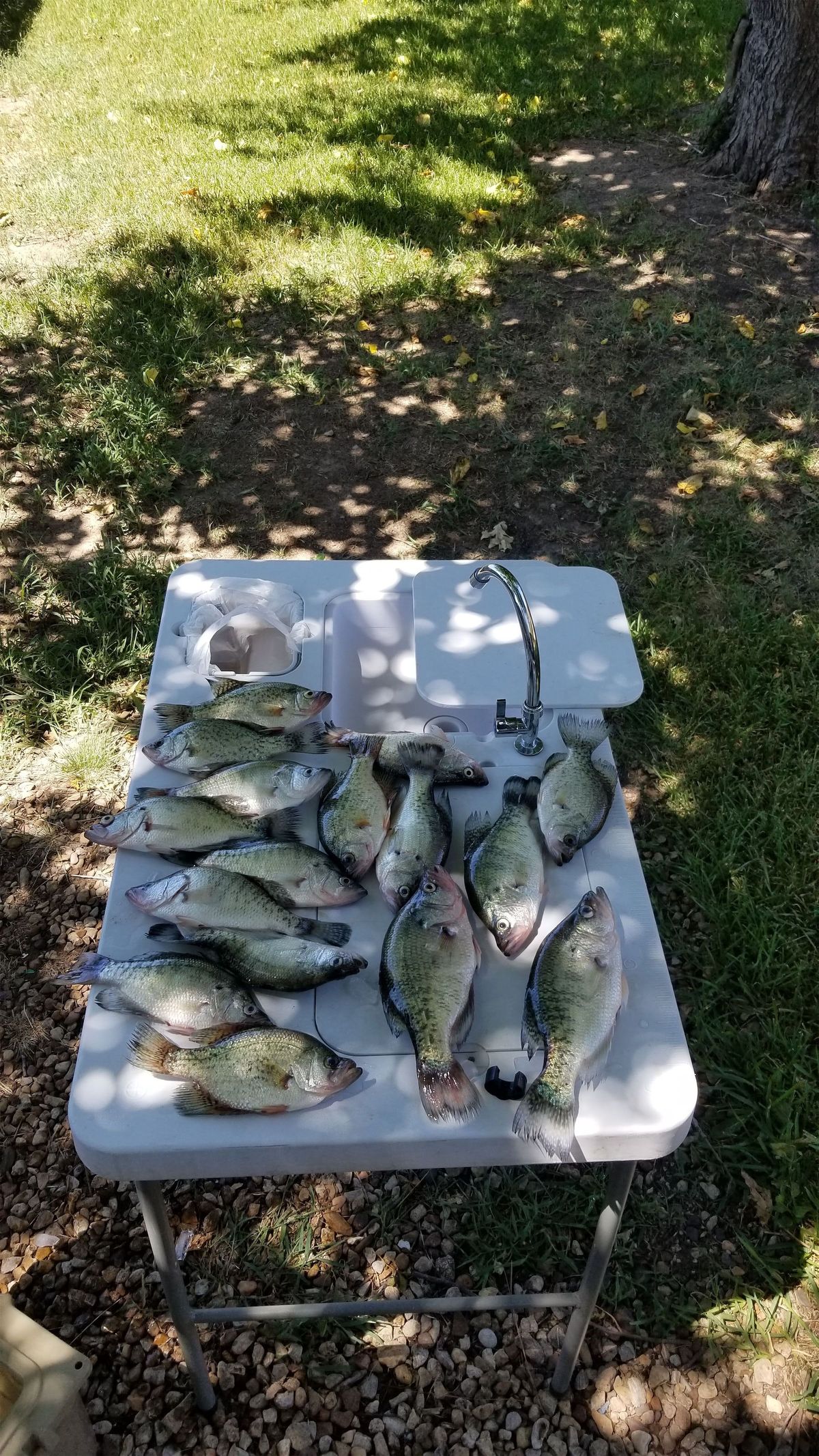
Aquilla has both white crappie and black crappie. Whites are more common here, same as on Whitney. They run a little smaller on average than the Whitney fish in my experience, but the volume's better. Most of what I catch is in the 10 to 12-inch range, with the occasional 13 or 14-inch slab in spring.
Black crappie show up around the deeper structure and the dam area. Heavier-bodied for their length, darker patterning. I don't catch as many on Aquilla as whites, but they're in there.
The 2,500-acre lake is small enough that the crappie population is concentrated. Find the right brush pile and you've found the school. Find three good brush piles in different parts of the lake and you've got a full day.
Spring Spawn Timing
Same general window as Whitney, sometimes a week earlier because Aquilla warms faster. Mid-February through early April. Peak spawn is usually mid-March, when water temps hit 58 to 65 degrees.
When they're spawning, they're shallow. 4 to 8 feet of water, near brush, near submerged timber, sometimes right up against the bank if there's any cover at all. You can almost always tell when the spawn is on by what comes up to the boat. If you're catching mostly females full of eggs, the spawn hasn't peaked yet. If you're catching milky-bellied males, it's on.
Pre-spawn (late February through early March) is some of the best fishing of the year. Crappie stage on deeper brush, 10 to 16 feet, before they push up shallow. They're feeding hard to put on weight for the spawn. A small jig or a minnow at the right depth and they're easy.
Post-spawn (mid-April into May) the fish move back out to slightly deeper structure and start feeding to recover from the spawn. Smaller schools, more dispersed, but still a good bite if you're patient.
Where to Find Them on Aquilla
Aquilla has fewer fishable brush piles than Whitney just because it's smaller, but the ones it has hold fish.
The standing timber up the lake. The upper end has a lot of submerged trees, especially in the river arm. Crappie use the timber as cover, suspending in the branches at various depths. Drop a jig vertically into the branches and you'll catch them.
Brush piles in the main lake. Whoever sunk Aquilla's brush piles knew what they were doing. They're in the right spots. 8 to 20 feet of water, near drop-offs or channel edges. Your fish finder will mark them clearly.
The rip-rap along the dam. Less of a crappie thing than a bass thing, but I've caught crappie hugging the rip-rap on cool spring days when the rocks were holding heat.
Boat docks. A few of the homes around the lake have docks. Crappie use them in pre-spawn for shade and structure. If you can fish a dock without bothering anybody, it's worth a few casts.
Creek arms. Cool-water inflows during spring. Crappie stack here on the warm-up days.
Techniques
Same toolbox as Whitney crappie. Light tackle. Patience. Vertical fishing.
A small jig, 1/16 ounce, on 4 to 6-pound line. Cast or vertical drop into brush. Slow lift and drop. Most of the bites come on the fall, same as anywhere.
Jig colors: chartreuse, white, pink, or blue/chartreuse. I keep four colors in the kit and change if one's not producing. Some days they want the chartreuse and they won't look at white. The next day it's reversed.
Live minnows under a bobber work great, especially when the kids are along or when you don't want to think too hard. Hook the minnow through the lips, set the bobber at the depth you're marking fish, and let it work. Sometimes simple is just better.
Spider rigging works if you want to cover water on a slow day. Multiple rods set at different depths, slow-trolling brush piles and channel edges. Not how I usually fish Aquilla because the lake's small enough to pick spots instead of cover water, but it's an option.
Eating Aquilla Crappie
Crappie out of Aquilla taste the way they should. Clean, sweet, white meat. The cooler water of this lake compared to Whitney probably helps a little, same as it does for the catfish (which I wrote about in the Aquilla catfish piece if you haven't read it).
Texas statewide crappie regs: 25 per day, 10-inch minimum. The 10-inch minimum is the one to pay attention to. Plenty of Aquilla crappie are right around 10 inches, and you don't want to keep an undersized one. I carry a small ruler in the boat. Quick measure, decide. Below 10, back in the water.
Fry them whole or fillet them. A 10 to 12-inch crappie is a pretty perfect fillet size. Two pieces per fish, dredged in seasoned cornmeal, fried in oil at 350 for about 3 minutes a side. Done.
Booking a Crappie Trip on Aquilla
Crappie season on Aquilla runs February through May for the strong bite. June through January, it's still possible but it's not what you'd plan a trip around.
Tell me when you want to come and I'll tell you whether the timing's right for crappie. If it is, we launch on Aquilla, run between three or four brush piles, and you'll have a good shot at a solid box of crappie if they're biting.
I provide rods, jigs, minnows, all of it. You bring a license and a cooler.
Book a spring crappie trip. The fish are quiet and the lake is quieter.