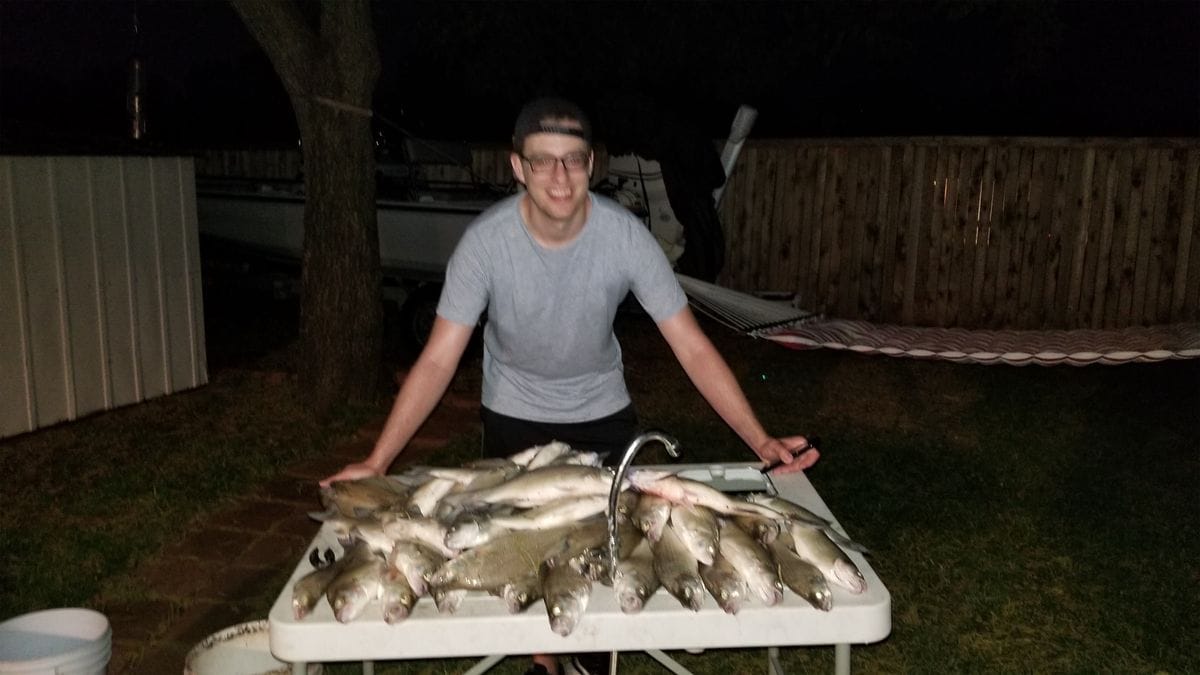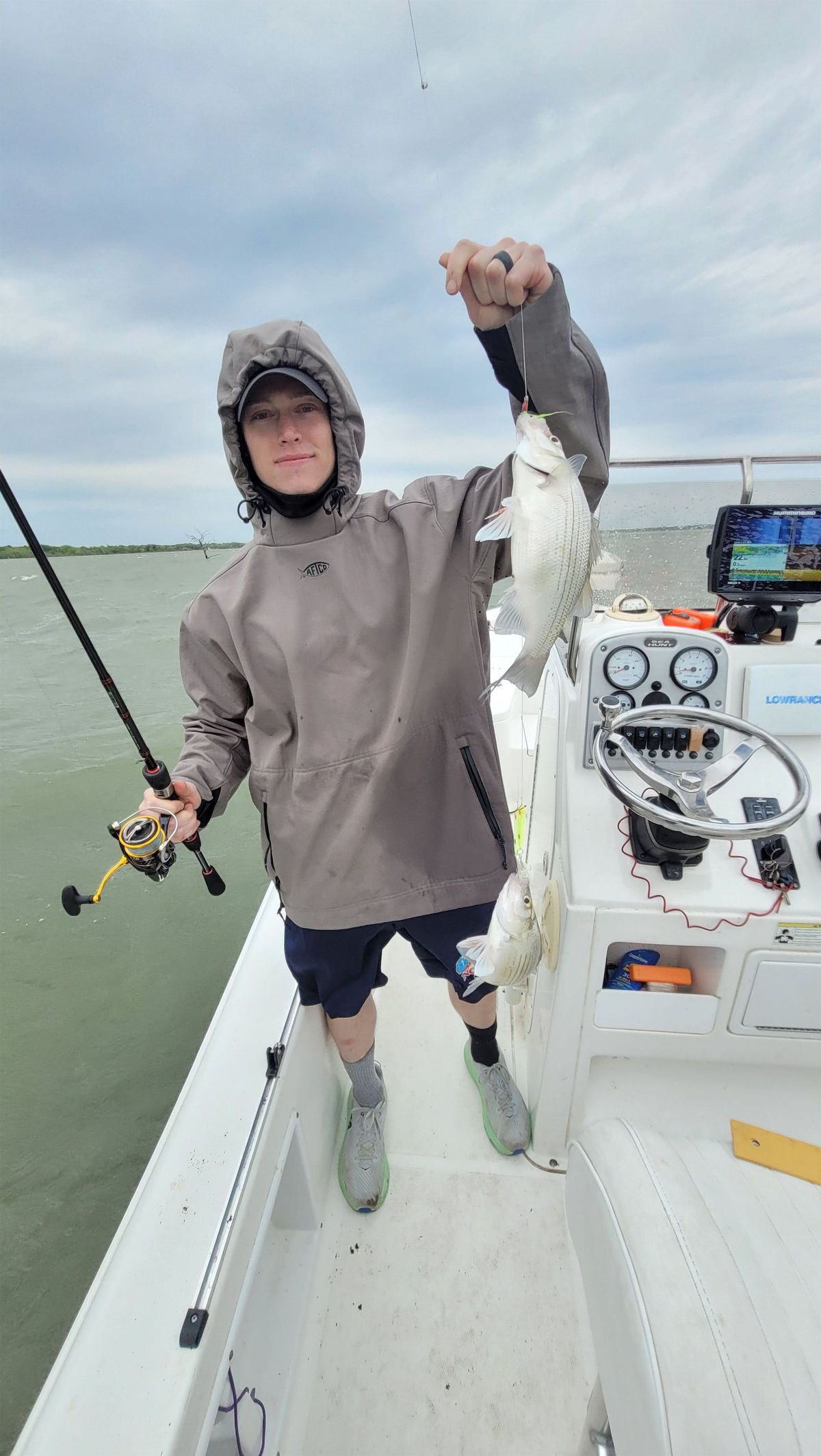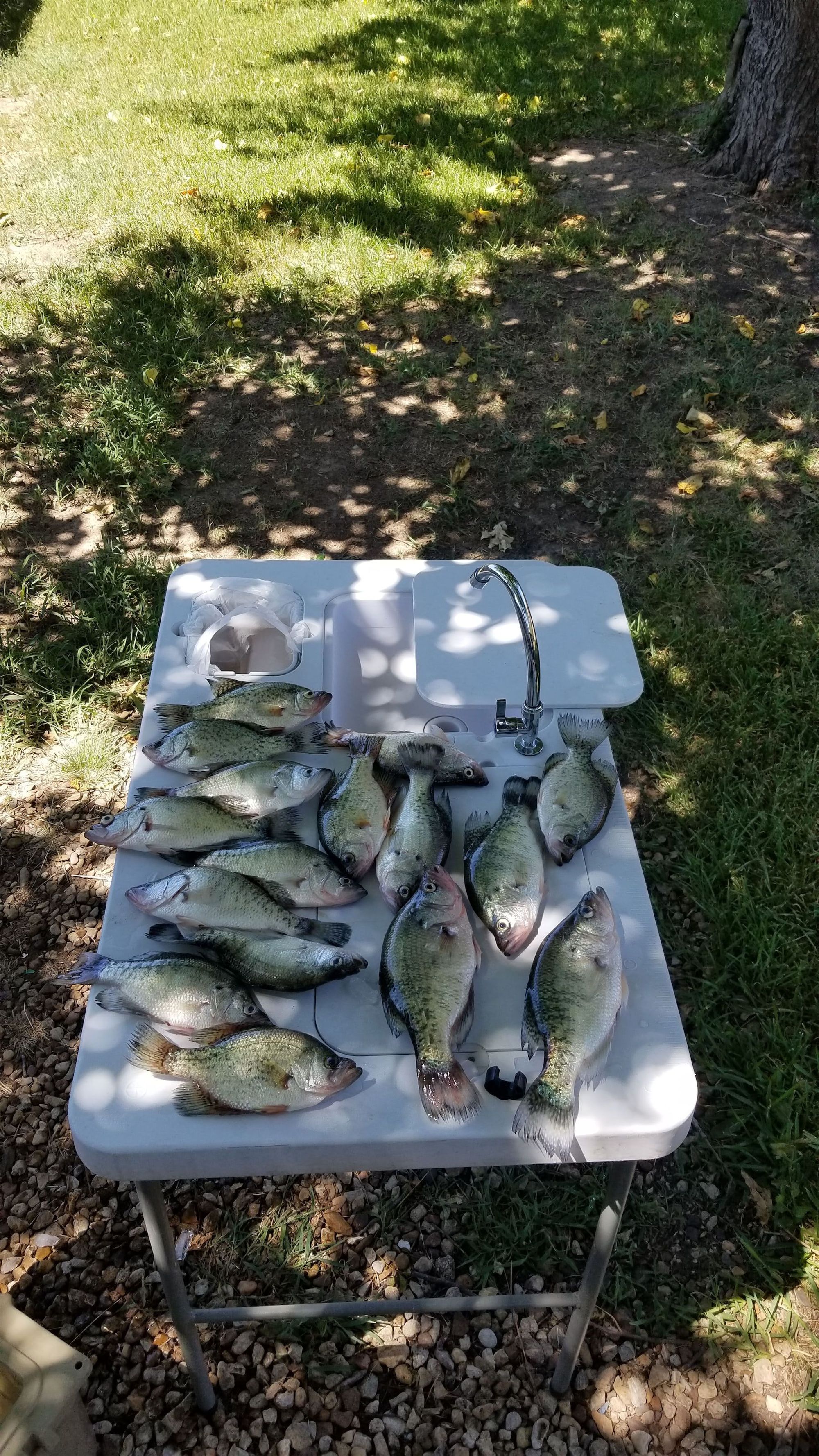
Everybody calls me about stripers. I get it. Whitney's a striper lake, that's the reputation, and it's earned. But if you asked me what the best eating fish in this lake is, I wouldn't say striper. I'd say crappie without thinking about it. Pan-fried crappie with butter and cornmeal is the best meal that comes off this water, and almost nobody's talking about it.
That's fine by me, honestly. Less pressure on the brush piles.
White Crappie vs. Black Crappie on Lake Whitney
Both species are in Whitney. White crappie are more common by a good margin. You'll know the difference if you look. White crappie have vertical bars on their sides, blacks have more of a scattered spotty pattern. Blacks also tend to be a little rounder, stockier build.
In practice, most of what you'll catch here are whites. I'll pull the occasional black crappie off deeper structure, but it's maybe one out of every fifteen or twenty fish. The techniques are the same for both, so it doesn't change much about how you fish. Just worth knowing what's on your line.
When to Target Crappie on Lake Whitney
Crappie are temperature fish. Once you understand that, the calendar makes sense.
Spring (February through May). This is it. The big window. When water temps climb into the mid-50s, crappie start staging. They push out of deep water toward shallower structure, brush piles, docks, standing timber. By the time you hit 55 to 60 degrees, they're spawning in 3 to 10 feet of water. February and March are pre-spawn, April is usually peak spawn, May is post-spawn transition.
The spawn bite is the best crappie fishing of the year. They're shallow, they're aggressive, and they're grouped up. If you've got the right brush pile dialed in, the action's steady. Crappie stack in the spring, and when they're biting they don't make you wait.
Summer (June through August). They scatter. Water temps push into the 80s and crappie drop deep, 20 feet and below. They spread out along channel ledges and deeper brush. You can still catch them, but it's harder work. Vertical jigging over known structure is about the only reliable play. Most of my summer clients are chasing catfish or stripers, and I don't blame them.
Fall (September through November). This is the sleeper season for crappie. Water cools back down, baitfish push into the creeks, and crappie follow. It's not as concentrated as the spring spawn, but the fish are fat from summer feeding. I've had some of my best individual fish come in October. People overlook fall crappie on Whitney because they're thinking about striper season. Their loss.
Winter (December through January). Deep. 30 feet and below sometimes. They stack on channel ledges and deep brush, and you need to go straight down to them. Vertical jigging with a good fish finder. It's slow, methodical fishing. Not for everybody. But the fish are there, and the lake's basically empty.
Crappie Fishing Techniques for Lake Whitney
Brush pile fishing. This is the bread and butter. Crappie love brush. Submerged cedar tops, Christmas trees people sank years ago, any kind of woody structure in 5 to 20 feet of water. You drop a jig right into the edges of the pile and let it sit. Don't get cute with it. Crappie hits are light, just a little tick or the line goes slack. Keep your rod tip up and pay attention.
Dock shooting. This is a spring thing mainly. Crappie stage under boat docks during the spawn, especially docks over 6 to 8 feet of water. You skip a jig under the dock like you're skipping a stone. It takes some practice to get the cast right, but once you figure it out, it's one of the most fun ways to catch crappie. The fish are right up against the pilings and cross-members.
Spider rigging. Multiple rods fanned out off the front of the boat, each with a jig or minnow at a slightly different depth. You idle over brush piles and channel edges and let the baits do the work. It's not glamorous fishing but it covers water. Good way to figure out what depth they're holding at when you're not sure.
Vertical jigging. Summer and winter method. You find them on the fish finder, park over them, and drop a jig straight down. This is how you catch crappie in 25 to 35 feet of water. Small jig, light line, just bump it on the bottom and lift. Patience fishing.
Minnow fishing. Live minnows under a slip bobber. Never goes out of style and it works on crappie that won't touch a jig. Set the bobber depth to whatever they're holding at and wait. Kids do great with this setup because you can see the bobber go under.
Baits and Jigs for Whitney Crappie
Keep it simple. A 1/32 to 1/16 ounce jig head with a small soft plastic body covers 90% of situations. Chartreuse and white are the two colors I throw the most. Chartreuse in stained water, white in clearer conditions. I'll mix in some pink and black/chartreuse combos sometimes, but honestly those first two do the work.
Live minnows are the backup plan that never fails. If the jig bite is off, switch to minnows. I've never had a day where crappie flat refused a minnow.
For line, 4 to 6 pound test monofilament or fluorocarbon. Light is the word. Crappie have paper mouths and a soft bite. Heavy tackle means missed fish.
Where to Find Crappie on Lake Whitney
I'm not going to give you GPS coordinates. That's not how this works. But I'll tell you what to look for.
Brush piles. They're scattered all over the lake in 8 to 25 feet of water. Some were placed by crappie fishermen over the years, some are natural accumulation. You find them with a fish finder, and then you mark them. Building a brush pile map takes time, which is why a guide helps.
Boat docks and marinas. Spring crappie stack under docks, especially on the main lake arms. Look for docks with 6 to 10 feet of water under them. The older docks with more crossbeams and structure underneath tend to hold more fish.
Standing timber and laydowns. Anywhere you see wood in the water, there are probably crappie nearby during the spring. Stumps, fallen trees, anything that gives them cover close to a spawning flat.
Channel ledges. Where the old river channel cuts through, crappie hold on the drop-offs in summer and winter. This is your deep water play. The fish stack along the edge where 15 feet drops to 25 feet.
Bridge pilings. The bridges on Whitney create structure that crappie use year-round. Current breaks and shade. Simple as that.
Lake Whitney Crappie Regulations
Standard Texas statewide. 25 per day combined, white and black crappie together. 10-inch minimum length. Check with TPWD if anything changes, but those have been the numbers for as long as I've been fishing here.
25 fish is a generous bag limit. A good spring morning, you can hit it. And with crappie, that's a lot of fillets in the freezer.
Crappie as Table Fare
I said it at the top and I'll say it again. Crappie are the number one eating fish in Lake Whitney. Better than striper, better than catfish, better than white bass. The meat is white, flaky, mild, and it takes to a pan like it was designed for it.
My favorite way is simple. Cornmeal, salt, pepper, butter in a cast iron skillet. Three to four minutes a side. Don't overcook it. Crappie fillets are thin and delicate. The second you start seeing the edges turn golden, flip it. The second the other side matches, it's done.
That's a meal worth catching fish for.
Why a Guide Matters for Whitney Crappie
Crappie spots aren't marked on any map. Brush pile locations are local knowledge, passed around between a handful of people who've put in the time to find them. I've put in the time to mark the structure that matters. I know which brush piles hold fish in March and which ones are better in October. I know the docks that produce and the ones that look good but never do.
You can figure it out on your own. It'll just take you a few seasons of trial and error. Or you can get on my boat and I'll put you on them.
I bring all the tackle, the jigs, the minnows, everything. You bring a license and a cooler. I'll put you on them.